
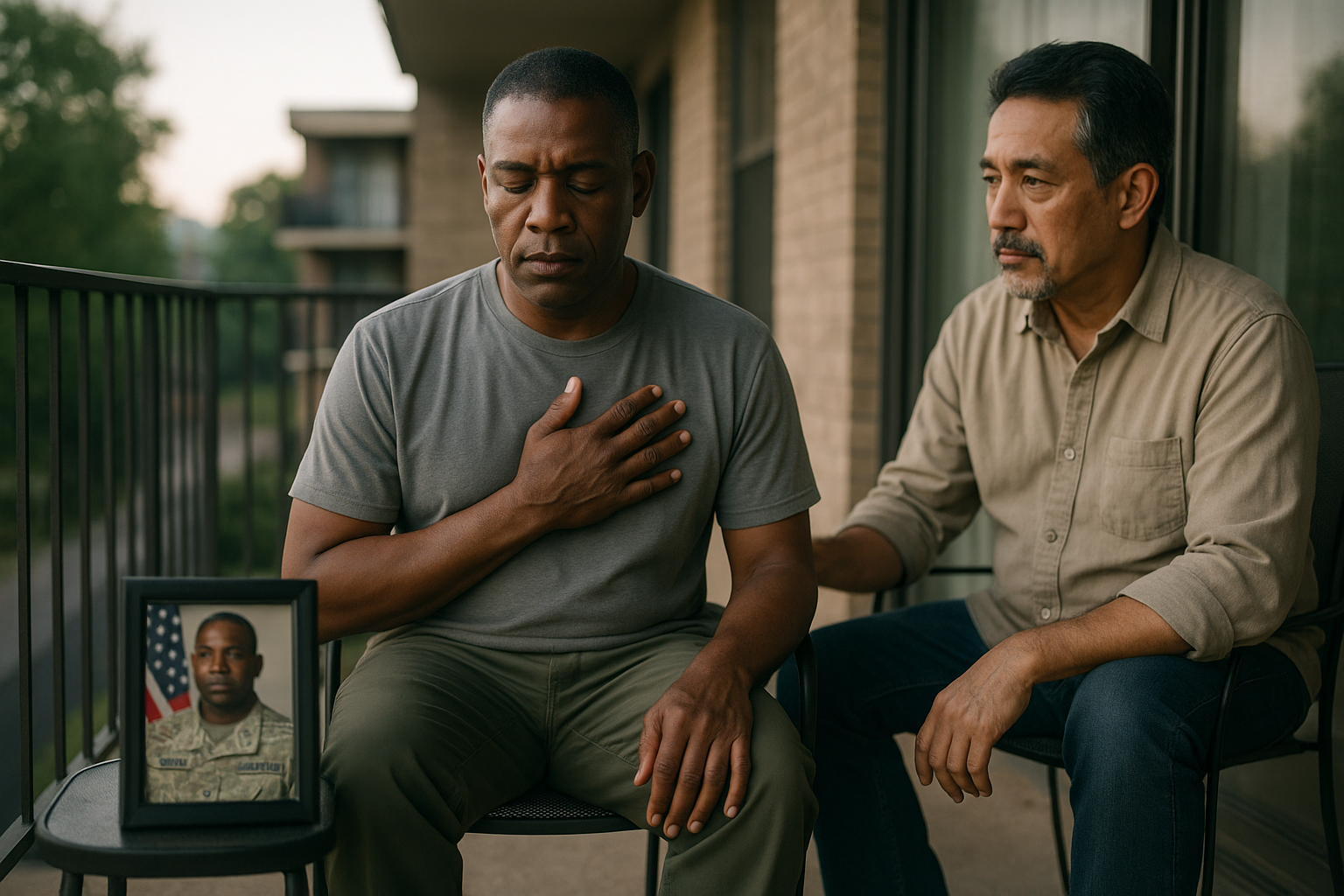
Survivor guilt after combat is a painful response to living through an event when others did not, or to believing you should have prevented a loss. It does not mean you are weak, selfish, or responsible for everything that happened. These reactions can be part of trauma, grief, PTSD, or moral injury, and support from trusted people and qualified professionals can help you carry them more safely.
What does survivor guilt feel like?
Survivor guilt may appear as thoughts, emotions, body reactions, and changes in behavior. A Veteran might think, “Why me?” “I should have done more,” or “I do not deserve to enjoy my life.” You may replay decisions, imagine different outcomes, or compare your life with someone who died or was seriously injured.
Common signs include:
- Persistent guilt, shame, sadness, anger, or numbness
- Difficulty accepting praise, comfort, or positive experiences
- Nightmares, intrusive memories, or strong reactions to reminders
- Avoiding people, places, conversations, or activities connected to the experience
- Feeling unworthy of relationships, success, rest, or happiness
- Trying to punish yourself through isolation, overwork, reckless behavior, or substance use
- Sleep problems, irritability, trouble concentrating, or being constantly on guard
Not every Veteran with survivor guilt has PTSD, and not every person with PTSD experiences survivor guilt. Only a qualified clinician can assess what you are experiencing. You do not need a diagnosis to deserve support.
Why can survivor guilt happen after combat?
Combat places people in situations involving danger, responsibility, loyalty, loss, and decisions made under extreme pressure. The mind may later search for a clear explanation for an event that was confusing, fast-moving, or beyond one person’s control. Hindsight can make choices seem more obvious than they were at the time.
Guilt can also reflect love and loyalty. Feeling pain about surviving may be one way your mind remains connected to people you served with. In other cases, a person may believe they violated an important value or failed to protect someone. This can overlap with moral injury, which refers to lasting distress related to actions, inactions, or events that conflict with deeply held beliefs. Understanding these reactions does not erase loss, but it can reduce the belief that suffering is the only way to honor someone.
What can help with survivor guilt?
Name the experience without accepting every conclusion
Try separating the feeling from the accusation. You might say, “I feel responsible,” rather than “I am responsible for everything that happened.” A feeling can be real and powerful without proving that its message is accurate. Write down the thought, the facts you remember, and what you would say to a trusted fellow Veteran facing the same situation.
Use grounding when memories or guilt surge
Grounding helps bring attention back to the present. Put both feet on the floor, notice five things you can see, and take a slow breath with a longer exhale. Name the date, your location, and one thing you are doing now. Hold a cool object, stretch your shoulders, or describe the room aloud. These steps do not change the past; they can help your nervous system recognize that the memory is happening now, not the event itself.
Reconnect in manageable ways
Isolation often gives guilt more room to grow. Consider a low-pressure connection: send a text, attend a peer-support meeting, sit with family, or take a walk with someone you trust. You do not have to tell the whole story. A simple statement such as “I am having a hard day and could use company” is enough.
Honor the person without punishing yourself
Some Veterans find meaning in a private ritual, service project, memorial activity, or act of care that reflects the values shared with someone who died. Choose something sustainable and safe. Honoring a person does not require giving up your health, relationships, or future.
Support your basic health
Regular sleep routines, meals, movement, time outdoors, and limiting alcohol or other substances may help reduce stress intensity. Avoid using alcohol or drugs to numb guilt, force sleep, or manage memories. They can worsen sleep, mood, impulsivity, and isolation, even when they provide short-term relief.
When is professional help appropriate?
Consider speaking with a mental health professional when guilt lasts, interferes with work or relationships, disrupts sleep, leads to avoidance, or makes you feel trapped or unsafe. Reach out sooner if you are using substances to cope, thinking about self-harm, or unable to manage daily responsibilities.
Evidence-based PTSD treatments, including trauma-focused therapies, may help people process traumatic memories, reduce avoidance, and examine guilt-related beliefs. A qualified provider can discuss options and consider your history, goals, culture, and readiness. You can also ask about care for grief, moral injury, depression, anxiety, or sleep problems. Do not change prescribed medications without talking with the prescribing clinician.
Related topics such as PTSD symptoms, grounding techniques, and moral injury may offer additional context as you decide what support fits your needs.
How can loved ones respond?
Listen without demanding details or trying to solve the past. You might say, “I am glad you told me,” “I believe that this hurts,” or “You do not have to carry this alone.” Avoid arguing about whether the Veteran is allowed to grieve, insisting they should move on, or asking for graphic details.
Offer specific, practical help: sit together, prepare a meal, drive them to an appointment, or help identify a trusted provider. Ask directly, “Are you thinking about hurting yourself?” Asking does not create suicidal thoughts. If the answer is yes, stay with the person when possible, reduce access to immediate dangers, and seek urgent help.
Faith, spirituality, and meaning
For some people, faith or spirituality provides meaning, connection, forgiveness, and a way to remember those who were lost. A trusted chaplain, faith leader, or spiritual community may be supportive. Spiritual care can complement mental health treatment, but it does not replace qualified clinical care. It is also okay if faith is not part of your coping.
When to get immediate help
If you may hurt yourself or someone else, cannot stay safe, or are in immediate danger, get help now. Veterans Crisis Line: Dial 988 then Press 1, text 838255, or use VeteransCrisisLine.net chat. Call 911 for immediate danger. If possible, tell a trusted person, stay with someone, and move away from weapons or other means of harm while help is on the way.
Surviving does not make you responsible for every outcome, and continuing to live does not betray anyone. Support can help you remember what happened without letting guilt define the rest of your life.
Trusted PTSD & Veteran Support Resources
This article is educational and is not a diagnosis or a substitute for professional care.
- VA National Center for PTSD
- VA PTSD Self-Help and Coping Resources
- Veterans Crisis Line — Dial 988 then Press 1; text 838255

0 Comments