
What is hypervigilance?
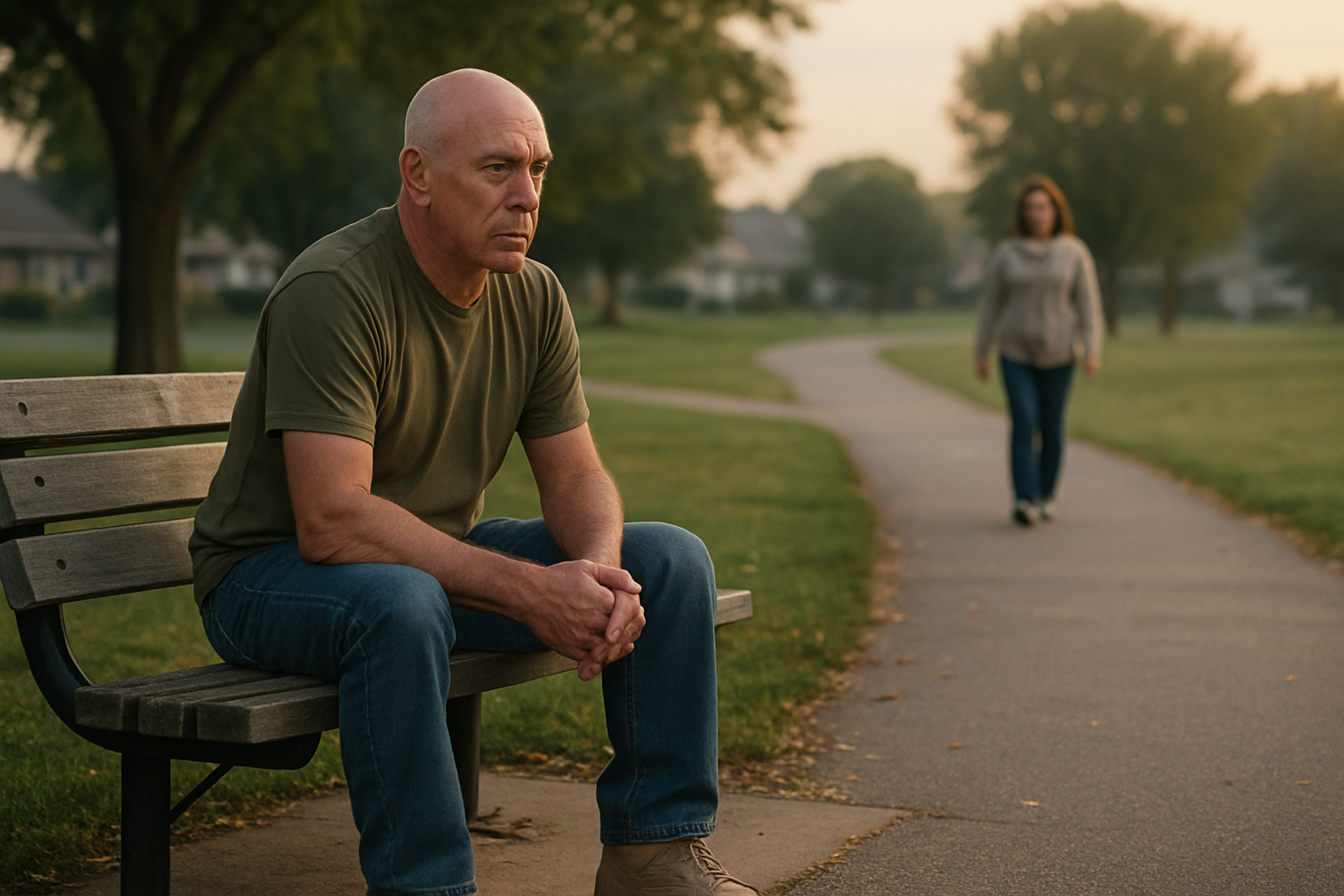
Hypervigilance is a heightened state of alertness in which your mind and body keep scanning for possible danger. You may feel watchful, tense, easily startled, or unable to fully relax. You might check doors and windows repeatedly, sit with your back to a wall, monitor every sound, or notice changes in people’s voices and movements before anyone else does.
For Veterans, service members, and others affected by trauma, this response can make sense as a learned survival pattern. During dangerous experiences, paying close attention may have helped you respond quickly. After the danger has passed, however, the same alarm system may continue operating as if something could happen at any moment.
The short answer: hypervigilance is not a character flaw, a sign of weakness, or proof that you are “overreacting.” It is a protective response that may have become difficult to turn down. It can occur with post-traumatic stress and other mental health or medical concerns, but experiencing hypervigilance by itself does not diagnose PTSD. A qualified health professional can help you understand what is happening.
How hypervigilance may feel and look
Hypervigilance can affect attention, emotions, behavior, sleep, and relationships. It does not look exactly the same for everyone. Some people become visibly restless or watchful. Others appear calm while feeling intensely alert inside.
- Constant scanning: You keep checking the room, exits, people, traffic, or changing sounds.
- Being easily startled: A dropped object, sudden movement, loud noise, or unexpected touch causes a strong reaction.
- Difficulty relaxing: Sitting down, resting, attending a social event, or falling asleep may feel unsafe.
- Sleep problems: You may have trouble falling asleep, wake often, sleep lightly, or prefer to sleep near an exit.
- Irritability or anger: Small frustrations can feel bigger when your nervous system is already operating at high alert.
- Physical tension: You may notice tight shoulders, clenched teeth, a racing heart, sweating, shallow breathing, or a tight stomach.
- Difficulty concentrating: Your attention may keep returning to possible threats, making work, school, conversations, or driving harder.
- A strong need for control: You may plan every detail, avoid surprises, or become distressed when plans change.
- Avoidance: You may stop going to crowded places, restaurants, sporting events, stores, public transportation, or unfamiliar locations.
- Safety behaviors: You might repeatedly check locks, keep lights on, monitor news or social media, or position yourself where you can see everyone.
These reactions can create a tiring cycle. The more your mind searches for danger, the more possible threats it may notice. The more tense your body becomes, the more convincing the sense of danger can feel. Avoiding situations may bring short-term relief, but it can also teach your brain that the situation was too dangerous to face.
Why can this happen after trauma?
The brain and body have built-in systems for detecting danger. When those systems identify a threat, they can prepare you to fight, flee, freeze, or otherwise protect yourself. Heart rate and breathing may change. Muscles may tighten. Attention may narrow toward what seems most important for survival.
Trauma can change how easily this alarm system activates. Your nervous system may respond to reminders of danger, uncertainty, loud sounds, darkness, crowds, certain locations, or interpersonal conflict. Sometimes the trigger is obvious. Sometimes the reaction appears to come from nowhere because the reminder is subtle or outside conscious awareness.
In a combat or operational environment, staying alert may have been necessary. Checking surroundings, anticipating problems, and noticing unusual details may have helped protect you and others. When you return to civilian life, those habits may remain useful in some situations but become exhausting when they are always switched on.
Hypervigilance can also be influenced by poor sleep, ongoing stress, pain, grief, substance use, medical conditions, anxiety, depression, or repeated exposure to upsetting news. None of these possibilities means you caused the problem. They are reasons to consider a complete, qualified evaluation rather than trying to judge yourself.
Hypervigilance is different from reasonable awareness
Awareness helps you respond appropriately to what is actually happening. Hypervigilance often feels urgent even when the current situation is low risk. The difference is not always easy to identify, especially when your past experiences taught you that danger can appear without warning.
For example, noticing the location of an exit in a crowded building can be ordinary preparation. Feeling unable to listen to a conversation because you must repeatedly inspect every person and doorway may suggest that your alarm system is working too hard. Looking around before crossing a street is sensible. Remaining tense, scanning continuously, and expecting an attack in a familiar neighborhood may be more disruptive.
The goal is not to force yourself to ignore danger or stop using good judgment. The goal is to increase your ability to notice the difference between a present threat and a remembered or anticipated threat.
What may help in the moment
When hypervigilance rises, start with small actions that communicate present safety to your body. You do not have to make the feeling disappear. A useful first step may be lowering its intensity enough to choose what to do next.
Name the present situation
Use simple, factual statements. For example: “I am in my home. It is Tuesday afternoon. I hear a truck outside. I am uncomfortable, but I do not see an immediate threat.” This is not about arguing with yourself or pretending everything is fine. It is about separating current facts from predictions and memories.
Use your senses to orient
Slowly notice what you can see, hear, feel, smell, and taste. Identify several neutral details, such as the color of a wall, the feeling of your feet on the floor, or the temperature of the air. If counting helps, count objects in the room or name a few things you can see. Orientation can help your attention return to the present.
Practice controlled breathing
Try breathing in gently and making the exhale a little longer than the inhale. For example, breathe in for about four counts and out for about six, without forcing your lungs or holding your breath. Continue for several cycles if it feels comfortable. If focusing on breathing makes you more anxious, stop and use grounding through your senses or movement instead.
Release physical tension
Lower your shoulders, unclench your jaw, loosen your hands, and place both feet on the floor. You can slowly stretch, walk at an easy pace, or press your feet into the ground and release. These actions do not prove that danger is absent, but they can reduce some of the body signals that keep the alarm going.
Choose a practical check, then pause
If you believe there may be a real safety issue, make one reasonable check or ask for help. Afterward, try not to repeat the check indefinitely. You might say, “I checked the lock once; I will return to my activity now.” This can take practice. The purpose is not to remove all uncertainty, but to avoid letting repeated checking control your day.
Use a transition routine
Moving between settings can be difficult. Before entering the house after work, before going into a store, or after waking from a nightmare, create a short routine: pause, orient to the present, take a few steady breaths, and identify your next small task. Predictable transitions can help your nervous system shift gears.
Longer-term strategies
Hypervigilance often improves through consistent support rather than one perfect coping skill. Consider the following approaches and notice what fits your circumstances.
Protect sleep without demanding perfection
Sleep loss can make the alarm system more sensitive. Keep a regular wake time when possible, reduce stimulating activities close to bedtime, and make your sleep environment comfortable and predictable. If you need to check the room, consider a brief, planned routine rather than repeated checks. Nightmares, insomnia, pain, or breathing problems during sleep deserve professional attention.
Move your body safely
Walking, stretching, strength training, swimming, or other enjoyable activity may help discharge tension and support overall health. Start at a manageable level, especially if pain, injury, or medical concerns are present. Exercise is not a replacement for PTSD treatment, but it can be one part of a broader coping plan.
Reduce avoidable stimulation
Continuous crisis coverage, upsetting videos, arguments online, excess caffeine, and alcohol or other substances can keep your body activated or disrupt sleep. You do not have to avoid all news or social contact. Try setting limits, choosing reliable sources, and taking planned breaks. If alcohol or drugs seem connected to your alertness, sleep, anger, or avoidance, consider discussing this confidentially with a qualified professional.
Track patterns without judging yourself
A brief log can help you identify triggers and helpful responses. Record the situation, what you noticed in your body, the thought or prediction that appeared, what you did, and what happened afterward. Look for patterns such as crowded spaces, anniversaries, fatigue, conflict, or certain sounds. The purpose is learning, not proving that your reactions are wrong.
Rebuild flexibility gradually
Avoidance can shrink your world. With appropriate support, you may be able to return gradually to activities you value. Begin with a manageable step and plan how you will cope if anxiety rises. For example, you might visit a store during a quieter period with a trusted person, remain for a limited time, and leave according to your plan rather than rushing out at the first sign of discomfort. A mental health professional can help you develop a safe, structured approach.
Evidence-based professional care
If hypervigilance is frequent, intense, or interfering with sleep, work, relationships, driving, or daily activities, consider contacting a qualified mental health or health care professional. You do not need to wait until symptoms become unbearable, and you do not need to have a diagnosis before asking for help.
Evidence-based PTSD treatments are available. Depending on your situation, a trained provider may discuss trauma-focused psychotherapies and other approaches supported by clinical research. A provider can also evaluate sleep, pain, anxiety, depression, substance use, medications, and medical conditions that may affect alertness. If you are already taking medication, do not change or stop it on your own. Discuss questions or concerns with the prescribing clinician.
Some Veterans prefer care through VA health services; others use community providers, military treatment facilities, employee assistance programs, or private clinicians. The most important factors include appropriate training, respect for your goals, cultural understanding, and a treatment plan you can discuss openly. If the first provider is not a good fit, seeking another qualified opinion is reasonable.
What can make hypervigilance worse?
- Trying to suppress every fearful thought or criticizing yourself for having it.
- Staying constantly connected to alarming news, social media, or conflict.
- Using alcohol or other substances to force relaxation or sleep.
- Ignoring severe sleep problems, pain, panic, or other health concerns.
- Repeatedly checking, searching, or seeking reassurance without a stopping point.
- Avoiding more and more places, people, responsibilities, or activities that matter to you.
- Assuming that being on guard is the only way to protect yourself or your family.
These patterns often provide understandable short-term relief. The point is not to blame yourself. It is to notice which strategies help only briefly and may keep the alarm cycle going over time.
How loved ones can respond
Family members, partners, friends, and caregivers may notice that a Veteran is tense, watchful, irritable, or uncomfortable in places others consider safe. Try not to interpret every reaction as a personal rejection or deliberate anger. At the same time, understanding trauma does not require anyone to accept threats, intimidation, or unsafe behavior.
- Ask what would help in the moment instead of demanding, “Why are you acting this way?”
- Use a calm voice and give reasonable personal space.
- Offer simple choices, such as leaving a crowded area or sitting somewhere quieter.
- Discuss safety plans and boundaries during a calm time, not in the middle of an argument.
- Give advance notice when plans, visitors, or surroundings will change.
- Encourage professional support without making treatment a condition of love or respect.
- Take threats, escalating aggression, or statements about self-harm seriously and seek immediate help.
Caregivers also need support. Living alongside hypervigilance can be stressful and exhausting. Set boundaries, maintain your own relationships and health care, and seek counseling or a support group if needed.
Faith, spirituality, and meaning
For some people, faith or spirituality offers meaning, connection, forgiveness, service, or a trusted community. A chaplain, faith leader, or spiritual counselor may be a helpful addition to care if that fits your beliefs. Others may find meaning through nature, creativity, community service, family, or personal values. Spiritual support can complement mental health treatment; it does not replace qualified care for PTSD or other health concerns.
When to get immediate help
Veterans Crisis Line: Dial 988 then Press 1, text 838255, or use VeteransCrisisLine.net chat. Call 911 for immediate danger.
Seek immediate help if you may hurt yourself or someone else, cannot stay safe, are experiencing a severe mental health crisis, or are so overwhelmed that you cannot care for basic needs. If possible, move away from anything you could use to cause harm, ask a trusted person to stay with you, and contact emergency support. You do not have to handle a crisis alone.
A practical reminder
Hypervigilance may have developed because your mind and body worked hard to protect you. You can respect that history while learning new ways to respond to the present. Start with one small step: orient to where you are, lower physical tension, contact someone you trust, or schedule an appointment with a qualified provider. Progress may be gradual, and needing support is not a failure. It is a reasonable response to carrying difficult experiences.
Trusted PTSD & Veteran Support Resources
This article is educational and is not a diagnosis or a substitute for professional care.
- VA National Center for PTSD
- VA PTSD Self-Help and Coping Resources
- Veterans Crisis Line — Dial 988 then Press 1; text 838255

0 Comments