
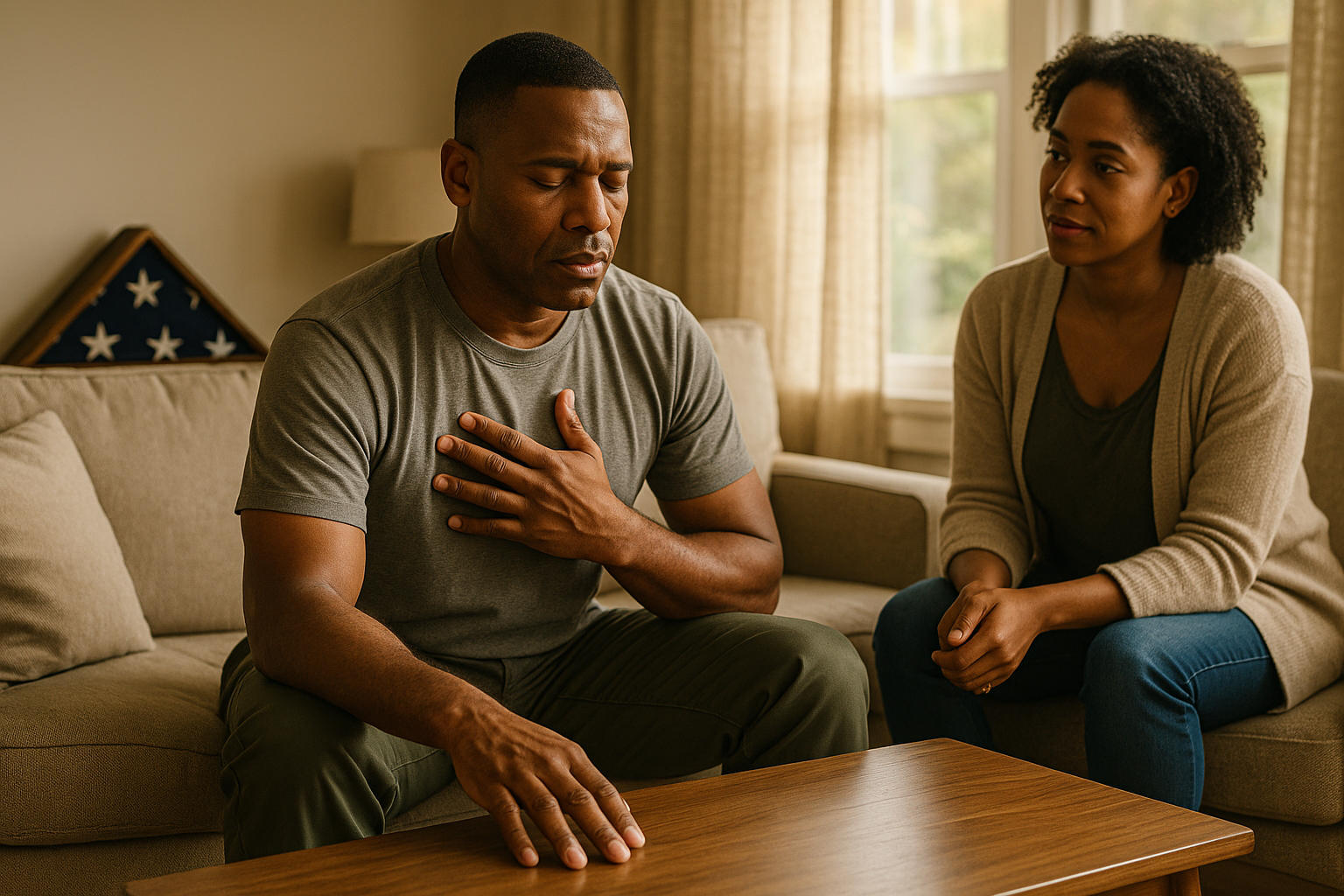
Panic symptoms after combat can feel overwhelming, but there are steps you can take in the moment: remind yourself that the reaction is an alarm response, move to a safer and quieter place, slow your breathing without forcing it, and use grounding to reconnect with the present. If these episodes keep happening, interfere with daily life, or come with thoughts of self-harm, reach out to a qualified mental health professional or urgent support. You do not have to manage this alone.
What can panic symptoms look like after combat?
Panic is a sudden surge of fear, alarm, or intense physical discomfort. It may happen during a reminder of combat, but it can also seem to come out of nowhere. For a Veteran’s nervous system, a crowded store, a loud bang, a smell, a news report, a nightmare, or an ordinary argument may resemble part of an earlier threat. The body can react before the thinking part of the brain has time to evaluate what is happening.
Possible symptoms include:
- Racing, pounding, or irregular-feeling heartbeat
- Fast breathing, shortness of breath, or a feeling of not getting enough air
- Chest tightness, sweating, shaking, chills, dizziness, or nausea
- Numbness, tingling, lightheadedness, or feeling detached from your body
- A sudden sense that something terrible is about to happen
- Fear of losing control, passing out, or dying
- Difficulty thinking clearly or speaking
- An urgent need to escape, scan the environment, or get away from other people
Some Veterans describe panic as being suddenly back in a high-alert state, even while they know intellectually that they are home. Others notice irritability, anger, restlessness, or an intense need to control doors, exits, sounds, or who is nearby. Panic may occur along with trauma-related symptoms such as intrusive memories, nightmares, avoidance, emotional numbness, or sleep problems. Having these symptoms does not by itself establish a diagnosis. A trained professional can help determine what is happening and what support fits your situation.
Why can panic happen after combat?
During danger, the body’s threat system is designed to act quickly. Heart rate and breathing can increase, muscles tense, attention narrows, and the body prepares to fight, flee, freeze, or protect others. After repeated exposure to threat, that alarm system may remain more sensitive. It can respond to reminders, stress, lack of sleep, pain, or conflict even when the present situation is not dangerous.
This is not a sign of weakness or a failure to leave combat behind. It is a human response to overwhelming experiences. Military training can also reinforce rapid scanning, readiness, and attention to unusual sounds or movements. Those skills may have been protective in a combat environment, but they can become exhausting when the nervous system continues using them at home.
Panic can also be affected by grief, moral injury, traumatic brain injury, chronic pain, depression, substance use, medical conditions, or major life changes. Caffeine, nicotine, alcohol, and some substances can intensify physical sensations or disrupt sleep. Do not assume that every episode is trauma-related. New, severe, or unusual physical symptoms deserve medical attention, especially chest pain, fainting, serious breathing difficulty, or symptoms that could indicate a medical emergency.
What can you do during a panic episode?
The goal is not to force the symptoms to disappear immediately. Trying to defeat or suppress every sensation can sometimes add fear. Instead, focus on safety, orientation, and giving your body time to come down from the alarm response.
1. Check immediate safety
Look for the simplest safe option. If you are driving, pull over when possible. If you are in a crowded or noisy place, move toward a quieter area without putting yourself or anyone else at risk. If you are carrying a firearm or other weapon, follow your established safety procedures and create distance from it while you regain control. Avoid making major decisions, confronting someone, or driving aggressively while highly activated.
You can use a brief statement such as: I am having a strong alarm reaction. I need to get somewhere safe and give my body a few minutes. If you are with someone you trust, tell them exactly what would help: less talking, a quiet place, a glass of water, or a reminder that you are home.
2. Orient to the present
Use your senses to identify current facts. Look around slowly and name five things you see, four things you feel, three things you hear, two things you smell, and one thing you taste or would like to taste. You can also say your name, the date, your location, and what you plan to do next.
For example: My name is Marcus. I am in my apartment in Virginia. It is Tuesday afternoon. I am sitting in a chair, and the sound I hear is a truck outside. I am not in the combat environment now. The purpose is not to argue with your memories. It is to help your brain distinguish then from now.
3. Let your exhale become slower
Breathing exercises can help some people, but they should be gentle. Try breathing in comfortably and allowing the exhale to last slightly longer than the inhale. Do not take huge breaths or hold your breath if that makes you dizzy or more frightened. You might inhale for a count of three and exhale for a count of four, repeating for several cycles.
If counting increases your stress, simply loosen your jaw, lower your shoulders, and breathe normally while paying attention to the feeling of your feet on the floor. The aim is steadiness, not perfect technique.
4. Use firm, neutral sensations
Press both feet into the floor. Hold a cool drink, notice the texture of a familiar object, or place one hand on a table and describe its surface. Stretch your hands, unclench your jaw, and slowly release tension from your shoulders. Avoid using extreme temperatures or anything that could injure you. Grounding is about safe contact with the present, not punishing yourself.
5. Use a short coping statement
Choose words that feel believable rather than overly positive. Examples include:
- This is intense, but I can take one safe step at a time.
- My body is sending an alarm. I can check what is actually happening.
- This feeling has risen before, and it has changed.
- I do not have to solve my whole life while my alarm system is activated.
6. Contact a support person
Make a simple plan before the next episode. Identify one or two people who understand that panic is not a request for debate or criticism. You might agree on a text such as Having a rough wave. Can you stay on the phone while I get grounded? A trusted person can speak calmly, avoid sudden movements, and help you focus on immediate safety.
What may make panic worse?
Several understandable reactions can keep the alarm cycle going. Trying to force yourself to feel normal immediately, repeatedly checking your pulse, searching the internet for frightening explanations, or assuming that every sensation means catastrophe may increase fear. Arguing with someone, driving while overwhelmed, or isolating completely can also create additional risk.
Alcohol and other substances may seem to provide quick relief, but they can worsen sleep, anxiety, mood, and trauma symptoms over time. They may also make it harder to recognize danger or choose a safe response. Caffeine and nicotine can increase sensations such as a racing heart or shakiness for some people. This does not mean you must make abrupt changes on your own. If substances or medication concerns are part of the picture, discuss them confidentially with a qualified healthcare professional. Never change prescribed medication without medical guidance.
Avoid treating grounding as a test you can fail. If one technique does not help, try another: orienting, walking slowly in a safe place, listening to calm music, calling someone, or focusing on a routine task. The purpose is to build options, not to perform perfectly.
How can you prepare for future episodes?
Preparation is easier when you are calm. Write a brief panic plan and keep a copy in your phone or wallet. Include:
- Your early warning signs, such as scanning, jaw tension, rapid breathing, or feeling unreal
- Two grounding methods that usually help
- The names and numbers of trusted people
- A safe place you can go, such as a quiet room or a parked vehicle
- Medical information or emergency contacts that others may need
- The professional or crisis resources you will contact if symptoms escalate
Notice patterns without blaming yourself. A brief log can record sleep, stress, reminders, physical symptoms, and what helped. This information can help a clinician understand your experience. It may also reveal practical factors, such as skipped meals, long periods without rest, crowded settings, or anniversaries that deserve extra planning.
Regular basics can support nervous-system recovery: a consistent sleep routine, food and hydration, manageable movement, time outdoors, and connection with people who feel safe. These steps are not a substitute for treatment, and they do not need to be perfect. Small, repeatable actions are often more useful than a demanding self-improvement plan.
When is professional help appropriate?
Consider professional support if panic episodes are recurring, becoming more intense, affecting work or relationships, disrupting sleep, leading you to avoid necessary activities, or causing you to use alcohol or other substances to cope. You can also seek help if you are constantly on guard, having nightmares or intrusive memories, feeling emotionally shut down, or struggling with anger, guilt, depression, or hopelessness.
A primary care clinician can help review physical symptoms and connect you with mental health care. A licensed mental health professional experienced with trauma can assess your concerns without assuming what they mean. Evidence-based PTSD treatments are available, including trauma-focused psychotherapies and other approaches selected with a qualified clinician. Treatment is not a judgment about your service or resilience. It is a way to understand your reactions, build skills, and make informed choices about recovery.
You can ask a provider:
- How do you distinguish panic, trauma reactions, and possible medical causes?
- What trauma-informed treatments do you provide?
- What should I do if symptoms become intense between appointments?
- How will we decide whether a treatment is helping?
- Can you include my partner, family member, or caregiver in education if I agree?
If the first provider is not a good fit, that does not mean help cannot work. You can ask about another clinician, a Veteran-centered program, group support, or telehealth. VA facilities, community providers, Veteran Service Organizations, and local peer-support programs may be possible starting points. A healthcare professional or VA resource can help you identify options available in your area.
How can families, partners, and caregivers respond?
During panic, keep your voice low and your words brief. Ask before touching the person, since unexpected contact can feel threatening. Offer choices rather than commands: Would you like the quiet room or the porch? Remind them of the present without arguing: You are home, and I am here with you. Let us focus on the next safe step.
Do not demand a full explanation while the person is highly activated. Avoid telling them to calm down, calling the reaction dramatic, blocking their exit, or surrounding them with several people unless immediate safety requires it. Once the episode passes, ask what was helpful and what was not. Create a plan together rather than assuming you know what the Veteran needs.
Supporters need support too. Learn about trauma reactions, protect your own sleep and boundaries, and seek counseling or a caregiver group if you are becoming frightened, exhausted, or isolated. Compassion does not require accepting threats or unsafe behavior. If someone may harm themselves or another person, prioritize immediate safety and emergency help.
Can faith or spirituality be part of support?
For some Veterans, faith or spirituality provides meaning, connection, forgiveness, ritual, or a trusted community. A chaplain, faith leader, or spiritual counselor may be helpful if that relationship feels safe and respectful. Spiritual support can complement medical and mental health care; it does not replace evaluation or evidence-based treatment. People who are not religious may find similar meaning through nature, service, personal values, music, or community.
When to get immediate help
If you may hurt yourself or someone else, cannot stay safe, or are facing an immediate medical emergency, get help now. Veterans Crisis Line: Dial 988 then Press 1, text 838255, or use VeteransCrisisLine.net chat. Call 911 for immediate danger. If you have severe chest pain, fainting, serious breathing difficulty, or another symptom that could be life-threatening, call 911 or seek emergency medical care.
A next step is enough
Panic after combat can make the present feel as dangerous as the past. In the moment, focus on safety, orientation, gentle breathing, and one manageable action. Afterward, write down what happened and consider contacting a healthcare professional or trusted support person. You do not have to prove that your symptoms are severe enough to deserve help. Reaching out is a practical act of self-protection and strength.
For related information, you may also find articles about grounding skills, PTSD treatment options, and supporting a loved one with PTSD useful as you build a broader support plan.
Trusted PTSD & Veteran Support Resources
This article is educational and is not a diagnosis or a substitute for professional care.
- VA National Center for PTSD
- VA PTSD Self-Help and Coping Resources
- Veterans Crisis Line — Dial 988 then Press 1; text 838255

0 Comments