
If a PTSD flashback makes you feel as though danger is happening again, focus first on safety and the present moment: look around and name what you see, feel your feet on the floor, slow your breathing without forcing it, and contact someone you trust if you need support. Flashbacks are intense trauma reactions, not a personal failure. With practice, a safety plan, supportive people, and evidence-based PTSD care, many Veterans learn ways to reduce their impact and recover more steadily after one.
What is a PTSD flashback?
A flashback is an involuntary trauma memory or body reaction that can make the past feel unusually immediate. It may involve images, sounds, smells, emotions, physical sensations, or a strong sense that something dangerous is happening now. Some flashbacks are vivid and visual. Others are less like a picture and more like sudden fear, anger, shame, numbness, or a bodily alarm that seems to have no clear explanation.
Not every distressing memory is a flashback. A person may remember an event while knowing it happened in the past, yet still feel upset. During a flashback, that sense of distance can become harder to access. A Veteran might briefly lose awareness of the current setting, react defensively to an ordinary sound, or feel pulled back into a situation connected with combat, military service, assault, disaster, medical trauma, or another life-threatening experience.
Flashbacks can happen to people with PTSD and to people dealing with trauma-related symptoms who have not been diagnosed. This article cannot determine what is happening for you. A qualified mental health professional can help assess symptoms and discuss appropriate care.
What can a flashback look or feel like?
Signs vary from person to person. Possible experiences include:
- Sudden images, sounds, smells, or physical sensations connected with a traumatic experience
- Feeling as if the event is happening again or that danger is close
- Rapid breathing, a racing heart, sweating, shaking, nausea, or muscle tension
- Freezing, becoming quiet, feeling detached, or having trouble responding
- Scanning the room, startling easily, reaching for an object, or moving away quickly
- Irritability, anger, panic, shame, grief, or intense helplessness
- Confusion about the date, location, or what triggered the reaction
- Difficulty remembering parts of the episode afterward
A flashback may last seconds or longer. Even when it passes quickly, the nervous system may remain activated. Fatigue, headaches, irritability, difficulty concentrating, or a need to be alone can follow. These aftereffects are a reason to use recovery steps rather than criticize yourself.
Why can flashbacks happen when a Veteran is safe?
After trauma, the brain and body can become more alert to possible threats. A sound, smell, location, anniversary, conversation, news report, dream, or body sensation may resemble something associated with the past. The reaction can occur before conscious reasoning catches up. For example, fireworks may activate a combat Veteran’s alarm response, or the smell of fuel may bring back a service-related memory. The present situation may be safe even while the body responds as if immediate danger is near.
Triggers are not always obvious. Lack of sleep, pain, alcohol or other substances, conflict, isolation, crowded places, and major life changes may lower a person’s ability to manage stress. This does not mean a Veteran caused the flashback. It means that noticing patterns can help with planning and support.
What should you do during a flashback?
The goal is not to force the memory away. Trying to suppress it aggressively can increase struggle for some people. Instead, use simple actions that communicate, “I am here, and this moment is different.” Choose one or two skills that feel realistic and practice them when calm.
1. Orient to the present
Say the facts of the current moment out loud or silently:
- “My name is __.”
- “I am in my home, office, or car.”
- “Today is __.”
- “That event happened in the past. I am experiencing a memory or alarm response.”
- “I can look for present-day safety before I decide what to do next.”
Use specific details. Name the color of a wall, the type of floor beneath you, or the person who is with you. This can help your attention reconnect with the current environment.
2. Use the five-senses grounding method
Slowly identify five things you see, four things you feel through touch, three things you hear, two things you smell, and one thing you taste. You do not need to complete every step perfectly. A shorter version can work: name three current sights and press both feet into the floor.
Keep the exercise concrete. Instead of saying “I see danger,” describe what is physically present, such as “I see a blue chair, a window, and a lamp.” If closing your eyes makes symptoms worse, keep them open and choose a stable object to look at.
3. Connect with the ground and your body
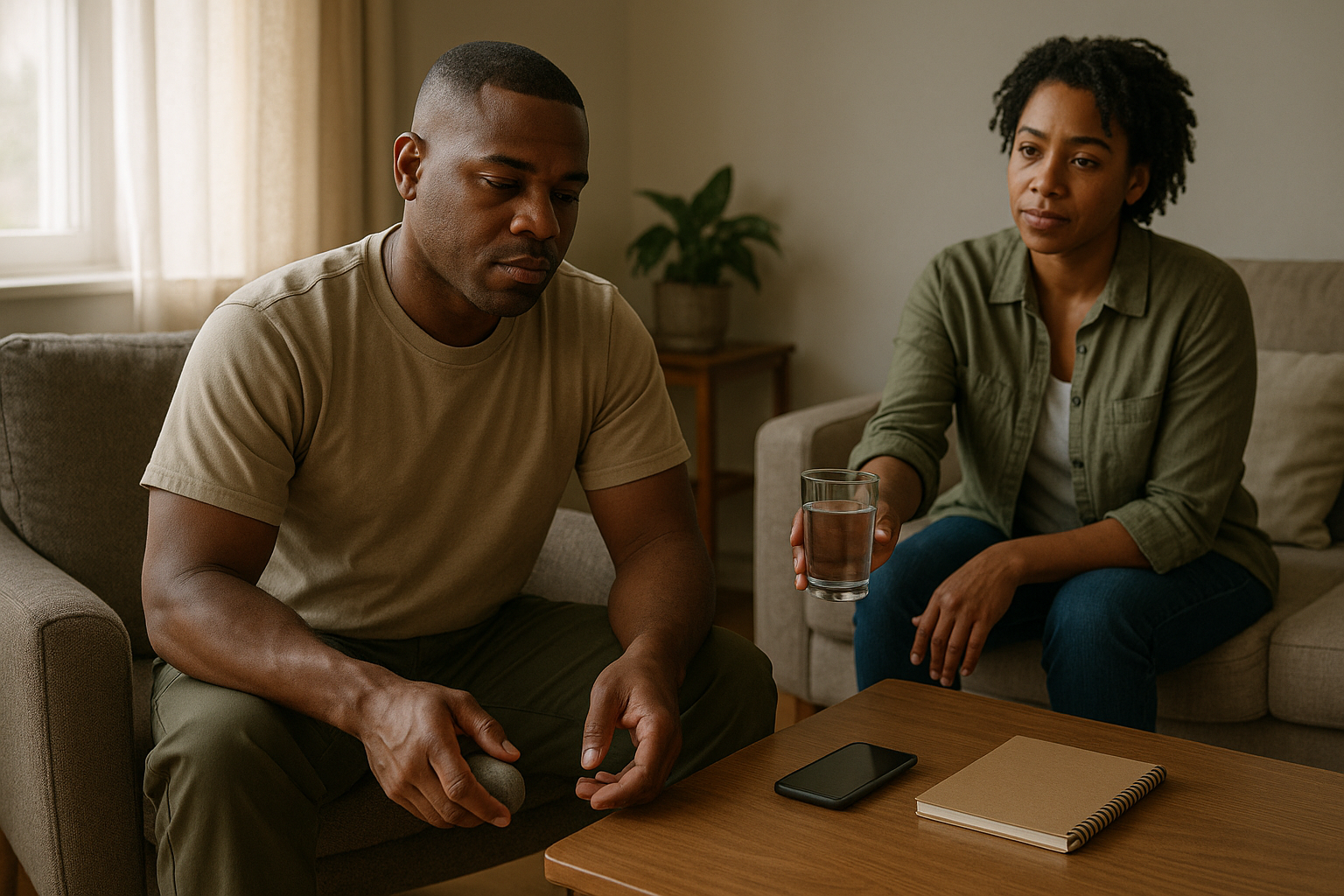
Press your feet into the floor. Notice the support of a chair. Hold a cool drink, a textured object, or a smooth stone if those sensations are comfortable. Stretch your hands and release them. These actions can provide present-time sensory information.
Some people benefit from gentle movement, such as walking slowly, rolling their shoulders, or shaking tension out of their hands. Avoid movements that could endanger you or someone else. If physical sensations are frightening or you have a medical condition, choose a gentler option and discuss concerns with a health professional.
4. Breathe in a way that does not create pressure
Try making the exhale slightly longer than the inhale, such as breathing in gently for three counts and out for four. Keep the breath natural rather than taking very deep breaths if that makes you lightheaded or more anxious. You can also simply notice one breath at a time and say, “I do not have to solve everything in this minute.”
5. Use a prepared grounding statement
Write a short statement in your phone, wallet, or notebook. For example: “This is a trauma reaction. I am at home with my family. I can step outside, call Sam, and wait for the intensity to come down.” A statement should be believable and specific, not a demand to feel fine immediately.
What if you are driving, working, or in public?
Safety comes first. If a flashback begins while driving, pull over in a safe place as soon as possible. Do not continue driving if you cannot stay oriented and attentive. At work or in public, move toward a quieter area if you can do so safely. Tell a trusted person, “I am having a trauma reaction and need a few minutes in a safe, calm place.” You do not owe strangers a detailed explanation.
Consider carrying a small grounding kit. It might include a written reminder of the present date and location, a contact list, water, mints, ear protection, a textured object, or a photo of a safe place. Keep it practical and personal. The purpose is to make helpful choices easier when concentration is limited.
How can Veterans prepare between flashbacks?
Preparation is often easier when you are not already overwhelmed. Track patterns without judging yourself. Note the setting, what happened beforehand, body sensations, thoughts, coping steps, and what helped afterward. You do not need to record graphic details. A simple note such as “poor sleep, crowded store, heart racing, went outside, called partner” may reveal useful information.
Build a personal plan with several parts:
- Early warning signs: tight jaw, scanning, irritability, numbness, nightmares, or feeling far away
- Grounding choices: orienting statements, sensory skills, movement, or paced breathing
- Safe places: a quiet room, trusted person’s home, clinic, or other location you have identified
- Support contacts: people who understand what to do and what not to do
- Professional resources: therapist, primary care clinician, VA or community provider, or crisis support
- Follow-up: a plan for rest, hydration, food, and checking in after an episode
Regular sleep routines, meals, movement, and social connection can support overall stress management. They do not eliminate PTSD, and they are not substitutes for treatment. Alcohol and recreational drugs may seem to numb symptoms temporarily, but they can worsen sleep, anxiety, judgment, or trauma reactions. If substance use is part of your coping, bring it up honestly with a qualified professional; you deserve support rather than blame.
What may make flashbacks harder to manage?
Several common responses can unintentionally increase distress:
- Arguing with yourself about whether you “should” be over the trauma
- Forcing yourself to describe painful details before you feel ready or supported
- Using alcohol or drugs to shut down symptoms
- Staying isolated because you fear burdening others
- Ignoring repeated warning signs until you reach a crisis point
- Driving, operating equipment, or confronting someone while severely disoriented
- Having loved ones crowd around, touch you without permission, or demand an immediate explanation
These reactions are understandable attempts to cope. If one has become risky or is not helping, a therapist can help you find safer alternatives. Do not change prescribed medication on your own. Discuss benefits, side effects, and concerns with the prescribing clinician.
When is professional PTSD help appropriate?
Consider qualified care if flashbacks are recurring, interfering with sleep or relationships, affecting work or school, leading to avoidance, increasing substance use, or making you feel unsafe. You do not have to wait until symptoms become severe. Care can also help when you are unsure whether an experience is a flashback, panic response, dissociation, grief reaction, or another health concern.
Evidence-based PTSD treatments may include trauma-focused psychotherapies and other approaches recommended by a qualified clinician after an individual assessment. A provider can explain options, likely commitments, and what to expect. Treatment is collaborative: you can ask questions, discuss cultural or military experiences, and tell the provider if an approach feels too fast or does not fit.
If you are a Veteran, possible starting points include a VA health care team, a community mental health professional, a primary care clinician, a Veterans service organization, or a trusted referral source. Service members can contact military health resources or a medical provider. Families and caregivers can seek support for themselves too; supporting someone with PTSD can be stressful, and you do not have to manage it alone.
Related topics that may also help include PTSD triggers, trauma-informed communication, and sleep and nightmares after trauma. Learning about these areas can help you build a broader plan, not just respond to the flashback itself.
How can family members, partners, and caregivers help?
During a flashback, use a calm voice and give the person space when possible. Remind them of the present without debating the memory: “You are here with me in the living room. I am going to give you room, and I can help you get somewhere quieter.” Ask before touching them. Sudden contact may feel threatening, even when intended as comfort.
Offer simple choices rather than many questions: “Would you like water, the quiet room, or for me to call Alex?” Keep your body language nonthreatening, avoid blocking exits, and do not demand eye contact. If there is immediate danger, leave the area and call emergency help. A loved one’s job is not to provide therapy or physically restrain someone unless trained professionals direct an emergency response.
Afterward, wait until the person is more oriented before asking what would help next time. Together, agree on a signal, a safe place, and preferred words. Ask what support feels respectful. Avoid shaming, minimizing, or saying, “You are safe, so calm down.” Safety can be real while the nervous system is still reacting.
Caregivers should protect their own boundaries and well-being. You can be supportive without accepting threats, violence, or ongoing abuse. Make a safety plan with professional guidance if episodes involve aggression, self-harm risk, weapons, dangerous driving, or inability to care for basic needs.
Faith, spirituality, and meaning
For some Veterans, faith or spirituality provides meaning, connection, forgiveness, ritual, or a trusted community. A chaplain, faith leader, spiritual-care professional, or supportive community may be part of a recovery plan if that feels right to you. Beliefs vary, and spiritual support should be respectful rather than blaming. Faith can complement mental health care; it does not replace evaluation or evidence-based PTSD treatment.
When to get immediate help
If you may hurt yourself or someone else, cannot stay safe, are in immediate danger, or are experiencing a medical emergency, get help now. Veterans Crisis Line: Dial 988 then Press 1, text 838255, or use VeteransCrisisLine.net chat; call 911 for immediate danger. If calling is not safe, move toward a safer location and ask a trusted person or emergency service for help. Do not remain alone with immediate risk when another safe option is available.
A flashback is a signal to seek support, not a reason for shame
PTSD flashbacks can be frightening, but they are understandable trauma-related reactions. Naming the present, using the senses, slowing down, moving to safety, and contacting trusted support can help you get through the moment. Longer-term improvement often involves a personalized plan and qualified care. You are allowed to seek help before a crisis, to choose support that respects your service and identity, and to take recovery one step at a time.
Trusted PTSD & Veteran Support Resources
This article is educational and is not a diagnosis or a substitute for professional care.
- VA National Center for PTSD
- VA PTSD Self-Help and Coping Resources
- Veterans Crisis Line — Dial 988 then Press 1; text 838255
0 Comments