
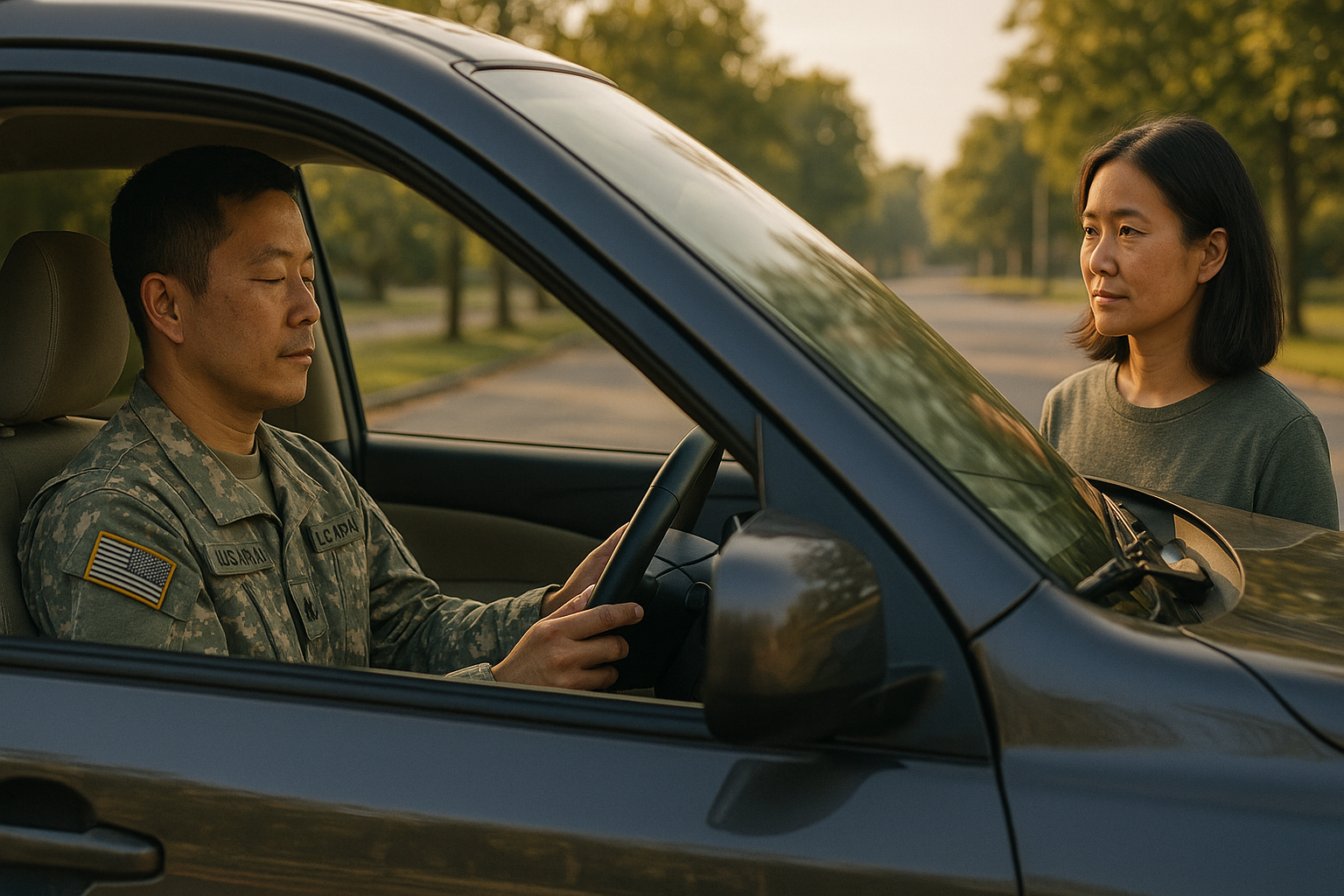
Yes, many Veterans can learn to drive more safely and comfortably after combat trauma, even when traffic, bridges, roadside objects, loud noises, or loss of control trigger PTSD symptoms. The goal is not to force yourself through overwhelming reactions or avoid driving forever. It is to understand your triggers, use practical coping skills, build confidence gradually, and seek qualified care when symptoms interfere with safety or daily life.
Why can driving trigger PTSD symptoms?
Driving requires constant attention to movement, distance, sounds, and possible danger. After combat or another traumatic experience, the brain may continue scanning for threats even when the present situation is ordinary. A sudden brake light, an object near the road, a vehicle approaching quickly, or a loud bang can resemble something connected to the past.
This response is not a character flaw or a sign that you are failing. It can be the nervous system trying to protect you based on what it learned during trauma. The brain may react before you have time to consciously decide whether the situation is safe.
For some Veterans, driving was part of military duties or occurred in places where danger was expected. For others, a crash, injury, witnessing harm, or another traumatic event changed how roads and vehicles feel. A person does not need to have been driving during the trauma for driving to become a trigger.
What might PTSD look like while driving?
Reactions differ from person to person. Some people notice clear fear or panic. Others experience irritability, emotional shutdown, intense focus, or a strong need to control every detail. You may recognize symptoms before, during, or after a trip.
Possible emotional and physical signs
- Sudden fear, dread, panic, or a feeling that something bad is about to happen
- Racing heart, sweating, shaking, dizziness, nausea, or shortness of breath
- Anger at other drivers, traffic, passengers, or unexpected changes
- Feeling trapped, detached, unreal, numb, or far away from the present moment
- Intrusive memories, images, sounds, or sensations connected to trauma
- Difficulty concentrating, judging distance, or remembering part of a drive
- Being extremely watchful of shoulders, intersections, vehicles, or roadside areas
- Strong urges to speed up, stop suddenly, turn around, leave the car, or avoid driving altogether
- Sleep problems or heightened stress after arriving at your destination
A trigger does not always produce a full flashback. Sometimes it appears as tension in the jaw, gripping the steering wheel, checking mirrors repeatedly, or feeling unusually exhausted after a short trip. Families may notice these changes before the Veteran talks about them.
What driving situations can become triggers?
Triggers are personal, and they can change over time. Common examples include traffic congestion, tunnels, bridges, narrow roads, overpasses, construction zones, roadside debris, sirens, helicopters, fireworks, aggressive drivers, darkness, rain, or being a passenger when someone else is driving.
Other triggers may be less obvious. A particular time of day, smell, weather pattern, type of vehicle, road surface, or route may bring up a body memory. Fatigue, pain, alcohol, conflict, and general stress can also lower your ability to manage reactions. This does not mean a trigger is dangerous; it means your stress system may be more sensitive in that moment.
How can I prepare before driving?
Preparation can reduce surprises and help you recognize when your stress level is rising. Start with trips that are necessary but manageable. If you are already highly activated, consider whether delaying the trip, asking for a ride, or using another transportation option is safer.
Make a simple pre-drive plan
- Choose a familiar route with safe places to pull over.
- Allow extra time so you do not feel pressured to rush.
- Check fuel, tires, lights, mirrors, and navigation before leaving.
- Keep water, prescribed emergency contact information, and a charged phone available.
- Tell a trusted person where you are going if that helps you feel supported.
- Decide in advance what you will do if symptoms increase.
A written plan might say: “If my distress reaches a level where I cannot focus, I will signal, pull into a safe public place, turn off the vehicle, and call my support person.” Having a plan ahead of time can make it easier to act instead of improvising during a stressful moment.
Check your readiness without judging yourself
Before starting the engine, notice your sleep, pain, hunger, stress, and current emotional state. You do not need to feel perfectly calm to drive. The important question is whether you can remain attentive, make decisions, and respond safely to changing conditions.
If you feel confused, detached, severely panicked, unusually drowsy, or unable to focus, do not drive until you are safer. A pause is a responsible choice, not a defeat.
What can help during a triggering moment?
When symptoms begin, the first priority is safe vehicle control. Keep both hands available, slow down gradually, and avoid abrupt maneuvers. If continuing to drive would be unsafe, use your turn signal and pull over in a legal, visible location away from traffic. Do not stop in a travel lane, on a shoulder that is unsafe, or in an isolated location if another option is available.
Use present-moment grounding
Grounding helps your attention return to the current environment. You can silently name what you see, feel, and hear without arguing with the reaction. For example: “I am on a city street. It is Tuesday. I am driving my own vehicle. The road ahead is clear. I can slow down and choose what to do next.”
Try feeling your feet against the floor, noticing the texture of the steering wheel, or identifying several neutral details in the present scene. These actions are meant to orient you to now, not to erase the memory or prove that you should not be upset. A related resource on the site about grounding techniques for PTSD may offer additional ideas to practice when you are not behind the wheel.
Regulate your breathing without forcing it
Some people find it useful to breathe slowly and comfortably, with a slightly longer exhale than inhale. Do not take exaggerated breaths if that makes you lightheaded. The goal is a steady rhythm that supports attention, not a test you must perform perfectly.
Use a brief coping statement
Choose words that are believable and practical. Examples include: “This is a trigger, and I can slow down,” “I am in the present,” or “I can pull over safely.” Avoid statements that shame you, such as “I should be over this” or “I have to prove I am fine.” Self-criticism often increases arousal.
How can I rebuild confidence gradually?
Avoidance can bring short-term relief, but complete avoidance may make driving feel more threatening over time. At the same time, forcing yourself into the hardest situation can overwhelm your nervous system and reduce confidence. A gradual, planned approach is usually more useful.
Consider making a list of driving situations from least stressful to most stressful. You might begin by sitting in a parked car, then driving around a quiet familiar area with a trusted support person, followed by a short trip at a less busy time. Later, you may practice a longer route or a previously difficult setting.
Repeat a manageable step enough times to learn what helps before moving to a harder one. Progress is not always linear. A difficult day does not erase earlier progress. If practice repeatedly causes intense symptoms or unsafe driving, pause and discuss the plan with a qualified mental health professional rather than pushing harder alone.
What can make driving reactions worse?
Several habits can increase risk or make symptoms harder to manage:
- Driving while severely sleep-deprived, highly distressed, or emotionally overwhelmed
- Using alcohol or non-prescribed substances to numb fear or tension
- Relying on a phone while driving, including texting or making complicated calls
- Speeding, tailgating, or responding to another driver’s aggression
- Trying to hide symptoms from everyone and refusing reasonable support
- Practicing difficult routes without an exit plan
- Stopping suddenly in an unsafe location when a safer place is nearby
- Assuming that one bad trip means driving will never improve
Do not change prescribed medication on your own, including medication that affects alertness. If you have concerns about sleepiness, concentration, anxiety, or driving safety, speak with the prescribing clinician or another qualified healthcare professional.
When should I seek professional help?
Consider professional support if driving-related symptoms are frequent, worsening, or interfering with work, appointments, family responsibilities, education, or independence. Help is also appropriate if you avoid necessary travel, experience panic or dissociation, have frequent intrusive memories, use substances to cope, or feel unsafe behind the wheel.
A qualified clinician can help you understand your symptoms and create a treatment plan that fits your history, goals, and safety needs. Evidence-based PTSD treatments are available, including trauma-focused psychotherapies and other clinical approaches recommended by qualified providers. Treatment is not a promise that you will never have a trigger. It can help reduce the power of trauma symptoms and improve your ability to respond to the present.
You can begin by contacting a primary care professional, a mental health clinician, a Veterans health service, or a community provider experienced in working with Veterans and trauma. You do not need to wait until symptoms become a crisis. If you are unsure how to explain the problem, you might say: “Driving brings on intense alertness and panic, and I want help managing it safely.”
Related topics such as PTSD hypervigilance, trauma triggers, and sleep difficulties may also be useful to explore with a clinician or through other trusted educational resources on IAmPTSD.com.
How can loved ones support a Veteran who struggles with driving?
Start with respect and curiosity. Ask what would help instead of assuming that the Veteran needs to stop driving, talk about the trauma, or be accompanied everywhere. A calm question such as “Would you like me to ride with you, help plan the route, or give you space?” gives the person choices.
During a reaction, keep your voice steady and use short, practical statements. If you are a passenger, avoid shouting directions, grabbing the wheel, criticizing other drivers, or insisting that the Veteran “calm down.” If the Veteran needs to pull over, support that decision when it can be done safely.
Afterward, talk when everyone is calm. Focus on safety and support rather than blame. You might say, “I noticed that drive was hard. What did you notice, and what should we do differently next time?” Encourage professional help without treating the Veteran as broken or incapable.
Family members and caregivers need support too. Repeatedly riding along during stressful trips, changing plans, or responding to anger can be exhausting. Set respectful boundaries, protect your own safety, and seek guidance if driving reactions are affecting the household.
What about faith, spirituality, or meaning?
For some Veterans, faith or spirituality provides meaning, connection, hope, or a trusted community. Prayer, meditation, chaplain support, or conversations with a faith leader may be comforting when they fit the person’s beliefs. These sources of support can exist alongside professional PTSD care; they do not replace assessment or treatment. No one should be shamed for having symptoms or pressured to view trauma as a failure of faith.
When to get immediate help
If you may hurt yourself or someone else, cannot stay safe, or are in immediate danger, call 911. Veterans Crisis Line: Dial 988 then Press 1, text 838255, or use VeteransCrisisLine.net chat.
If a person is having a crisis while driving, prioritize immediate safety: pull over when possible, move away from traffic, contact a trusted person or emergency service, and do not continue driving until the situation is stable. If someone has a weapon or another immediate means of harm, do not try to manage the danger alone; create distance and contact emergency help.
Moving forward one safe trip at a time
Driving after combat trauma can be difficult, but a triggering reaction does not define your ability, courage, or future. Notice patterns, prepare for predictable challenges, practice skills when calm, and make safety the priority. Support may include a trusted passenger, route planning, gradual practice, family understanding, and evidence-based professional care.
You do not have to handle this alone, and you do not have to prove anything by suffering in silence. Asking for help is a practical step toward greater control, connection, and freedom in daily life.
Trusted PTSD & Veteran Support Resources
This article is educational and is not a diagnosis or a substitute for professional care.
- VA National Center for PTSD
- VA PTSD Self-Help and Coping Resources
- Veterans Crisis Line — Dial 988 then Press 1; text 838255


0 Comments