
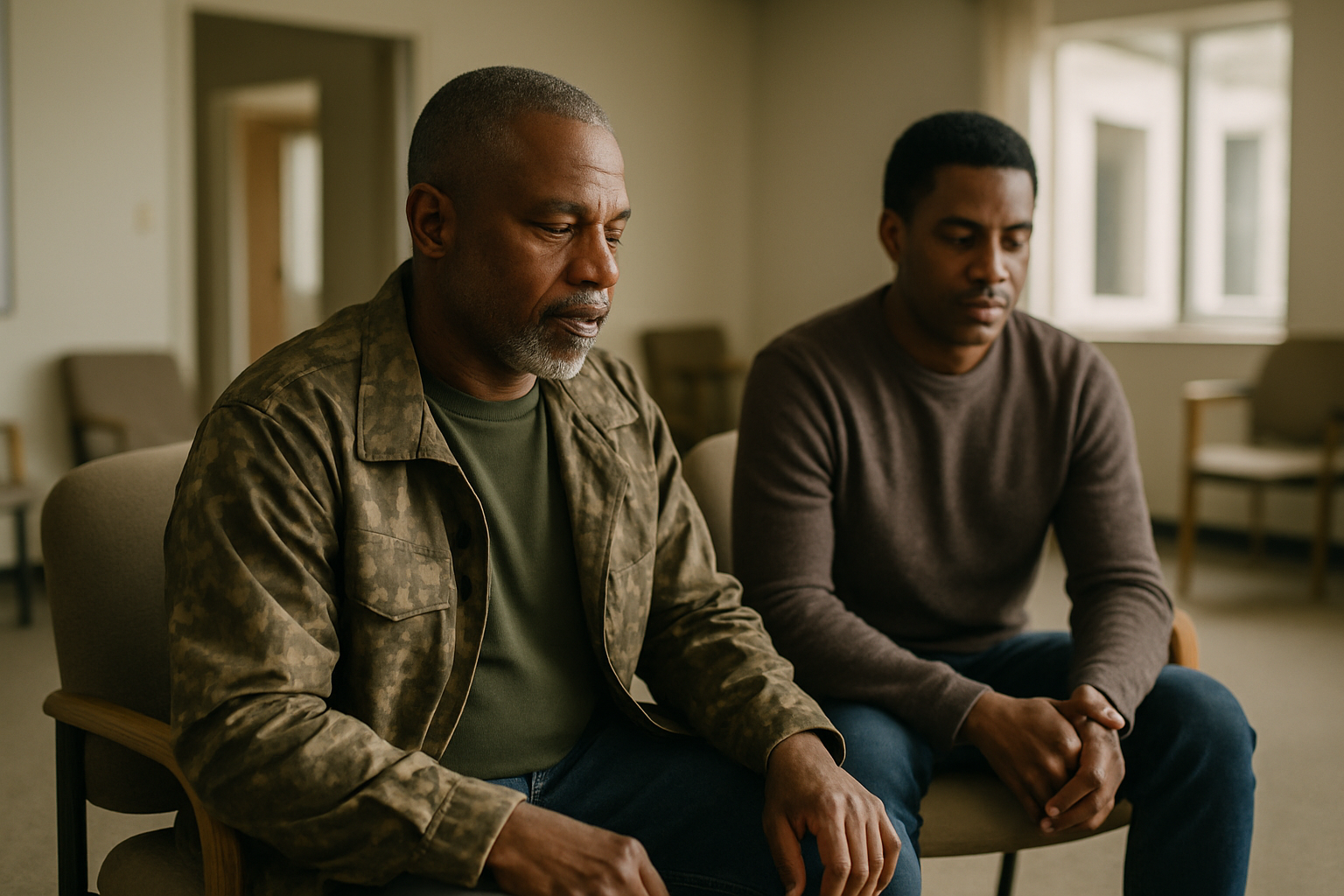
What is hypervigilance?
Hypervigilance is an ongoing state of watchfulness. The nervous system acts as if danger could appear at any moment, so it keeps looking, listening, and preparing to respond. This response may have been useful during deployment or another dangerous situation. Later, it can remain active in places that are objectively safer.
For a Veteran or service member, hypervigilance might look like automatically choosing a seat with a clear view of the entrance, checking exits, watching people’s hands, or waking at every unfamiliar sound. A family member might notice that you scan a room, avoid crowded places, or become tense when someone approaches from behind.
These reactions are not a character flaw. They are protective responses that may have become overactive or difficult to turn off. The goal is not to force yourself to stop noticing your surroundings. The goal is to build more choice: noticing what is happening, checking whether danger is present now, and helping your body return toward a calmer state when appropriate.
Common signs and symptoms
Hypervigilance can affect attention, emotions, physical sensations, behavior, sleep, and relationships. People experience it differently, and symptoms can change from day to day.
Scanning and threat monitoring
- Constantly checking doors, windows, exits, or the people around you
- Watching hands, faces, vehicles, or sudden movements
- Feeling unable to sit with your back to a door
- Noticing every sound, movement, or change in the environment
- Feeling responsible for monitoring everyone’s safety
- Having difficulty focusing on a conversation, movie, meal, or task because you are looking for possible threats
Strong startle and physical tension
- Jumping or reacting strongly to unexpected sounds or touch
- Clenching your jaw, tightening your shoulders, gripping objects, or staying physically braced
- Feeling your heart race, breathing become shallow, or your body heat rise
- Being restless, irritable, or unable to sit still
- Feeling exhausted from staying alert but still unable to relax
Sleep and concentration problems
- Difficulty falling asleep because your mind is monitoring the environment
- Waking frequently or sleeping lightly
- Checking locks or safety conditions repeatedly before bed
- Having trouble concentrating, remembering details, or completing tasks
- Feeling more alert at night or during quiet periods
Behavior and relationship changes
- Avoiding crowds, unfamiliar places, public transportation, restaurants, or events
- Becoming easily frustrated when plans change
- Feeling uncomfortable when others stand close or move unexpectedly
- Using alcohol or other substances to relax, sleep, or quiet your thoughts
- Withdrawing from family, friends, or activities you once enjoyed
- Arguing more often or reacting more sharply than you intend
Hypervigilance may occur alongside other trauma-related experiences, such as unwanted memories, nightmares, avoidance, emotional numbness, guilt, or feeling detached. Not everyone with hypervigilance has PTSD, and not everyone with PTSD experiences it in the same way.
Why can this happen after trauma?
During danger, the brain and body prioritize survival. Attention narrows toward possible threats, muscles prepare to act, and ordinary background information may become less important. This can happen automatically, without conscious decision-making.
After trauma, reminders may activate the same alarm system. A loud bang, a certain smell, a crowded room, darkness, a news report, a vehicle pattern, or an anniversary can make the body respond before the thinking part of the brain has time to evaluate the situation. Sometimes there is no obvious reminder. Stress, lack of sleep, pain, illness, conflict, or major life changes can lower the body’s ability to settle.
For some Veterans, the habits that helped them function in a dangerous environment do not fit every setting at home. Remaining observant may have been necessary during a mission, while the same level of alertness at a family gathering can interfere with rest and connection. This does not mean the training was wrong or that you should simply turn it off. It means your nervous system may need support learning when a high-alert setting is needed and when it is safe to stand down.
Notice the pattern without judging yourself
A useful first step is learning how hypervigilance shows up for you. You might briefly record:
- Where you were and who was present
- What you noticed in your body, thoughts, emotions, or behavior
- What happened just before the reaction
- How intense it felt and how long it lasted
- What helped, even a little
Keep this simple. The purpose is not to investigate yourself endlessly or prove that your reaction was unreasonable. It is to identify patterns. For example, you may learn that crowded stores are harder when you are tired, that poor sleep increases your startle response, or that a short walk after arriving somewhere helps you settle.
What may help in the moment
There is no single technique that works for everyone. Try one or two options when you are able, and practice them during calmer moments so they are easier to remember under stress.
Orient to the present
Slowly look around and name facts that show where and when you are. You might say silently: I am in my home. It is Tuesday afternoon. I am with people I know. The sound is a truck outside. Use present-day details rather than arguing with yourself about whether you should feel calm.
You can also identify several neutral or reassuring details: the color of a wall, the feel of a chair, the temperature of the room, or the location of a trusted person. This is not pretending that nothing difficult has happened. It is helping your attention include the current moment.
Use breathing that does not feel forced
Try breathing in gently and allowing the exhale to be a little longer than the inhale. For example, breathe in comfortably for a count of three and out for a count of four. Do not strain, hold your breath, or continue if it makes you dizzy or more distressed. Some people prefer placing a hand on the abdomen or simply noticing the breath without changing it.
Release physical bracing
Check your jaw, shoulders, hands, and legs. If it feels safe, lower your shoulders, loosen your hands, press your feet into the floor, or stretch slowly. A brief walk, gentle movement, or shaking out tension can help some people reconnect with their body without staying frozen in readiness.
Use the senses
Notice five things you can see, four you can feel, three you can hear, two you can smell, and one you can taste. You do not have to complete the entire sequence. The point is to shift attention from threat scanning toward several ordinary sensory details.
Make a practical safety plan
Reasonable preparation can reduce uncertainty. Before going somewhere busy, identify a quiet area, decide how you will leave if needed, and tell a trusted person what support would be useful. Planning is different from repeatedly checking every possible danger. Aim for enough information to participate, not perfect certainty.
Use a brief communication phrase
If you become overloaded, a simple phrase can prevent confusion: I am getting overstimulated. I need five minutes outside. You can share this plan with a partner, friend, coworker, or family member ahead of time.
Daily habits that can support recovery
Hypervigilance often becomes stronger when the body is depleted. Regular routines may not remove symptoms, but they can improve your ability to respond to them.
- Sleep routine: Keep a reasonably consistent sleep and wake schedule when possible. Make the bedroom comfortable and limit repeated safety checking once you have completed a reasonable check.
- Movement: Walking, stretching, strength training, or another activity you can do safely may help discharge tension and support sleep.
- Food and hydration: Regular meals and enough fluids can reduce physical sensations that may resemble alarm.
- Connection: Spend time with people who respect your boundaries and do not shame your reactions.
- Predictable transitions: Give yourself time to move from work, appointments, or public settings into rest.
- Meaningful activity: Hobbies, volunteering, education, nature, music, and time with animals may help your attention move toward life beyond threat.
If you use alcohol, cannabis, sedatives, stimulants, or other substances to manage alertness or sleep, consider discussing this honestly with a qualified professional. Substance use can sometimes intensify sleep disruption, irritability, anxiety, or alertness, and stopping suddenly can be unsafe for some substances. A clinician can help you discuss options without judgment.
What may make hypervigilance worse?
Some understandable coping strategies can keep the alarm system active over time. Repeatedly checking locks, news, or surroundings may bring short-term relief but make uncertainty feel more dangerous later. Avoiding every crowded place can shrink your life and increase fear of returning. Staying constantly busy may prevent your body from learning that rest is possible.
Other factors that may increase symptoms include severe sleep loss, isolation, ongoing conflict, excessive caffeine or other stimulants, frequent exposure to upsetting news, and using substances to numb or sedate yourself. These are not moral failures. They are signs that a coping strategy may be costing more than it helps.
Do not force yourself into situations that feel overwhelming as a self-directed test. Trauma-focused work is best approached gradually and with appropriate support. If a technique increases distress, stop, return to a basic grounding activity, and consider discussing it with a clinician.
When professional help may be appropriate
Consider seeking help if hypervigilance lasts, is getting worse, or interferes with sleep, work, school, driving, relationships, parenting, or daily activities. Professional support is also important if you are having frequent panic, nightmares, unwanted memories, anger that feels difficult to control, increasing isolation, or thoughts of harming yourself or someone else.
A primary care clinician, mental health professional, Vet Center, or other qualified provider can listen to your concerns and help assess possible causes. You can say, I feel constantly on guard and it is affecting my sleep and relationships. I want help understanding what is happening. You do not have to describe every trauma detail in your first conversation.
Evidence-based PTSD treatments can help many people reduce trauma-related symptoms and improve daily functioning. Depending on your situation, a qualified clinician may discuss trauma-focused psychotherapies, skills-based approaches, or other appropriate care. Treatment should be individualized. Do not change, stop, or start medication based on an online article; discuss medication questions with the prescribing professional.
Seeking care does not erase your service, toughness, or identity. Many people wait because they believe they should handle it alone, worry they will not be understood, or fear being judged. A provider with experience working with Veterans and trauma can help you decide what pace and type of care feel appropriate.
How loved ones can respond
Family members and caregivers may feel confused when someone seems tense, distant, irritable, or focused on exits and sounds. Try to remember that the reaction may be an alarm response rather than a deliberate rejection of you.
- Ask what would help instead of assuming. Try: Would you like space, company, or help leaving?
- Give a little warning before touching, approaching from behind, changing plans, or entering a room.
- Use a calm voice and allow extra time for the person to settle.
- Respect reasonable boundaries while still discussing how behavior affects safety and relationships.
- Make plans for crowded events, including a quiet place and an easy way to leave.
- Encourage professional support without pressuring the person to disclose trauma details.
Avoid mocking, surprising, cornering, demanding that the person calm down, or arguing about whether the danger is real while the alarm is active. Later, during a calmer moment, talk about patterns and make a shared plan. Loved ones also need support. Caregiving can be stressful, and your own rest, boundaries, and counseling matter.
Faith, spirituality, and meaning
For some people, faith or spirituality provides meaning, community, prayer, meditation, or a way to reconnect with values after trauma. A trusted chaplain, faith leader, or spiritual-care provider may be part of your support network if that feels right to you. Faith can complement mental health care; it does not replace qualified medical or psychological treatment, and no one should be blamed for having trauma symptoms.
When to get immediate help
If you may act on thoughts of suicide or harming someone, cannot stay safe, or are in immediate danger, call 911 or go to the nearest emergency department. Veterans can contact the Veterans Crisis Line: Dial 988 then Press 1, text 838255, or use VeteransCrisisLine.net chat. If possible, move away from weapons or other means of harm and ask a trusted person to stay with you while help is contacted. If you are helping someone else, take threats seriously, stay with them when safe, and call emergency services.
A next step you can take today
Choose one small action: write down what hypervigilance looks like for you, tell a trusted person, schedule an appointment, practice present-moment orientation for one minute, or plan a calmer way to leave an upcoming busy setting. You do not have to solve everything today.
Being on guard may have helped you survive. With time, support, and appropriate care, you can work toward having more control over when your alarm system takes the lead. The aim is not to forget what you have lived through. It is to make room for safety, rest, relationships, and a life that is not organized entirely around anticipating danger.
Trusted PTSD & Veteran Support Resources
This article is educational and is not a diagnosis or a substitute for professional care.
- VA National Center for PTSD
- VA PTSD Self-Help and Coping Resources
- Veterans Crisis Line — Dial 988 then Press 1; text 838255
0 Comments