
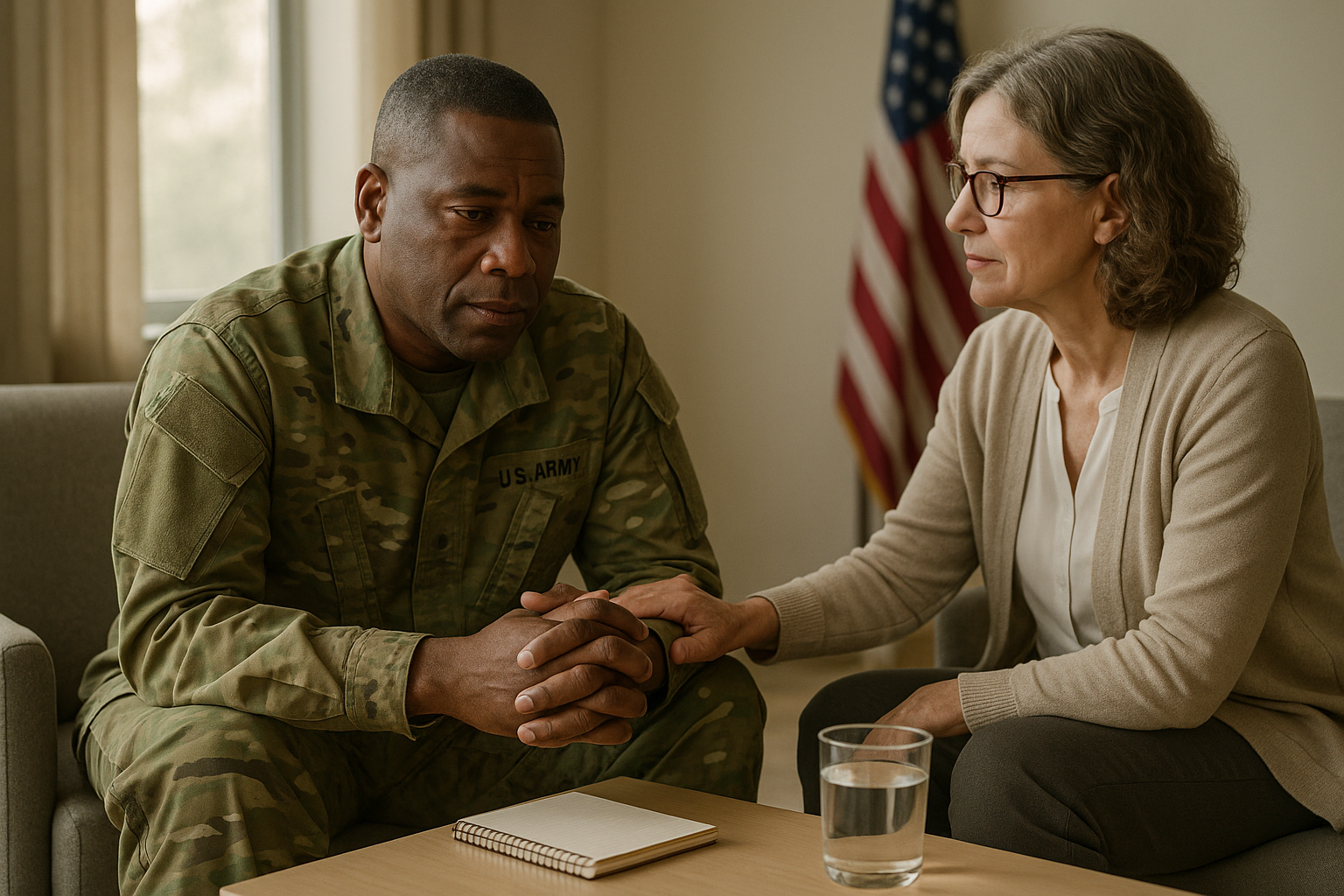
Moral injury can happen when a Veteran experiences, witnesses, participates in, or feels unable to prevent something that conflicts with deeply held moral values. It may lead to guilt, shame, anger, grief, spiritual struggle, or difficulty reconnecting with others. These reactions do not mean you are beyond help or deserve to suffer. Recovery often involves safe, honest support; understanding what happened; rebuilding self-compassion and trust; and, when appropriate, working with a qualified mental health or spiritual-care professional.
What is moral injury?
Moral injury describes the lasting emotional, psychological, social, or spiritual impact of a violation of one’s moral beliefs. It is not a diagnosis by itself. It can occur in combat, during military operations, in medical or emergency roles, or after experiences involving leadership decisions, perceived failures, betrayal, or harm connected to duty.
A person may feel moral injury after doing something they believe was wrong, failing to do what they believe they should have done, witnessing actions that violated their values, or feeling betrayed by trusted leaders, institutions, peers, or civilians. Sometimes the injury comes from a painful combination of circumstances rather than one clearly defined event.
For Veterans, moral injury may overlap with post-traumatic stress symptoms, depression, anxiety, grief, substance misuse, chronic pain, or difficulties adjusting to civilian life. These concerns can influence one another, but they are not identical. PTSD often centers on threat and danger responses, while moral injury commonly centers on meaning, responsibility, trust, identity, and values. A person can experience either one or both.
How might moral injury feel?
Moral injury does not look the same for everyone. Some people notice a powerful reaction soon after an event. For others, distress appears months or years later, perhaps after leaving the military, becoming a parent, attending a funeral, seeing news coverage, or reaching a quieter period of life.
Guilt and responsibility
Guilt often sounds like, “I did something wrong,” “I should have acted differently,” or “I failed someone.” It may be connected to a specific action or decision, but it can also become broader and less accurate over time. A Veteran may take responsibility for outcomes that were not fully within their control, overlook the information available at the time, or judge a past decision using knowledge gained later.
Some guilt can point toward values. It may show that compassion, loyalty, protection, or fairness matter deeply to you. At the same time, guilt becomes punishing when it treats a complex situation as if there were only one possible choice.
Shame and identity
Shame is often more global than guilt. Instead of “I did something wrong,” shame may say, “I am bad,” “I am broken,” or “I do not deserve forgiveness.” Shame can affect identity, relationships, and willingness to seek support. It may make a person hide, withdraw, reject compliments, or believe others would turn away if they knew the full story.
Shame can be especially painful for people whose military identity was built around honor, duty, competence, or protecting others. A Veteran may feel that one experience has erased every act of courage, care, or service that came before it. That conclusion can feel emotionally true while still being incomplete.
Other common signs
- Persistent self-blame or repeated mental replay of a decision
- Anger at oneself, leaders, institutions, a unit, an enemy, or a higher power
- Grief for people, ideals, trust, or the person you believed you were
- Feeling numb, disconnected, unworthy, or unable to experience joy
- Avoiding people, places, conversations, news, ceremonies, or reminders
- Difficulty trusting others or accepting care
- Loss of meaning, spiritual conflict, or questions about justice and forgiveness
- Changes in sleep, concentration, appetite, or emotional control
- Using alcohol or other substances to quiet memories or feelings
- Thoughts that life has no purpose or that punishment is deserved
These signs can also occur with PTSD, depression, grief, traumatic brain injury, chronic stress, or other health concerns. Reading about them cannot determine what is happening for you. A qualified professional can help assess your concerns without reducing your experience to a label.
Why can these reactions happen?
Military service often requires people to act under pressure, follow lawful orders, protect others, accept risk, and make decisions with incomplete information. Training and unit culture can strengthen commitment and teamwork, but they may also make it difficult to process morally painful experiences afterward.
During an operation, attention may be focused on immediate survival, mission requirements, or protecting a teammate. Emotional processing may be postponed until the person is safe. Later, the mind may try to understand what happened by searching for responsibility and meaning. That search can become harsh self-judgment, particularly when there was no safe opportunity to discuss the event.
People also commonly judge themselves by standards they would not apply to another person in the same circumstances. Hindsight can make alternatives seem obvious even when they were not. Rank, policy, communication failures, confusion, fatigue, fear, and limited information may all matter when understanding a past event. Recognizing context is not the same as avoiding responsibility. It is an effort to evaluate the whole situation fairly.
Betrayal can be another pathway to moral injury. A Veteran may feel abandoned by leadership, misled by an institution, unsupported after returning home, or betrayed by someone trusted. When a trusted person or system violates expectations, the injury may affect a person’s sense of safety and belonging as much as a frightening event does.
What may help with moral injury?
There is no single recovery path, and healing is not the same as forgetting or declaring that what happened was acceptable. Helpful care creates room for truth, responsibility, grief, compassion, and a future that is not controlled entirely by the past.
Start with a safe, nonjudgmental conversation
Consider speaking with a mental health professional who understands Veterans, trauma, guilt, shame, and military culture. You do not have to tell every detail during the first appointment. You can begin with, “Something from my service is affecting how I see myself, and I need help with guilt, shame, or trust.”
A good provider should respect your pace, explain the purpose of care, and collaborate with you on goals. Evidence-based PTSD treatments may help when PTSD symptoms are present, and other approaches may be considered for grief, depression, moral distress, anger, or relationship problems. Treatment planning should be individualized rather than based on a promise that one method works for everyone.
Separate responsibility from total blame
When the mind says, “Everything was my fault,” examine the statement carefully. Ask:
- What did I know at the time?
- What choices were realistically available?
- What pressures, orders, risks, or limitations shaped the situation?
- What parts were mine to decide, and what parts were outside my control?
- Would I judge a trusted teammate by this same standard?
This exercise is not about forcing yourself to feel innocent or excusing harm. It is about moving from automatic condemnation toward a fuller understanding. A therapist, trusted Veteran, chaplain, or other qualified support person can help you explore these questions safely.
Make room for grief
Moral injury may involve grief that others do not recognize. You may grieve a friend, a civilian life, a relationship, your expectations of leadership, or the person you were before the experience. Naming the loss can be an important part of recovery.
Some people create a private ritual, write a letter they do not send, visit a meaningful place, participate in a memorial activity, or talk with someone who understands military loss. These actions do not erase the past. They can give grief a place to be acknowledged instead of carrying it alone.
Reconnect with values through present-day choices
Values can guide what comes next. Ask, “What kind of person do I want to practice being today?” The answer might involve patience with family, honesty, service, protecting vulnerable people, accountability, creativity, or compassion.
Small actions count. Keeping one promise, checking on a friend, volunteering, caring for a pet, attending an appointment, or responding calmly during a difficult conversation can express your values. Recovery is often built through repeated choices rather than one dramatic moment of forgiveness or relief.
Use grounding and basic routines
When shame or anger surges, grounding can help you orient to the present. Put both feet on the floor, name five things you can see, slow your breathing without forcing it, or describe the room aloud. You can remind yourself, “I am having a painful memory or thought. I am in the present, and I can choose my next safe step.”
Regular sleep and wake times, meals, movement appropriate for your health, time outdoors, and contact with supportive people can strengthen your ability to cope. These habits are not a substitute for care, but they may make intense emotions more manageable.
What can make moral injury worse?
Isolation often gives shame more power. Avoiding every reminder may bring short-term relief but can leave fears and self-judgments unexamined. Alcohol or other substances may temporarily numb distress while worsening sleep, mood, relationships, impulsivity, or suicidal thinking. If substance use is part of your coping, you deserve support without humiliation or punishment.
Repeatedly searching for certainty about an unknowable past can also keep you trapped. So can consuming upsetting news, arguing online, or exposing yourself to reminders when you are already overwhelmed. Self-punishment, reckless behavior, refusing medical care, and believing you must handle everything alone can increase danger and distance you from people who might help.
Be cautious with anyone who promises a guaranteed cure, demands secrecy, shames you for seeking professional help, or presents an unproven treatment as established care. You can ask a provider what evidence supports an approach, what risks it carries, and how progress will be evaluated.
How can loved ones respond?
Families and caregivers may sense that something is wrong without knowing what to say. Start by listening rather than interrogating. You might say, “I can see you are carrying something heavy. I am here, and you do not have to explain everything today.” Avoid pressuring the Veteran to disclose details or telling them to simply forgive themselves.
Do not argue with the emotion, even when you disagree with the conclusion. “You are not a bad person” may be supportive, but it can feel dismissive if the Veteran believes they caused serious harm. Try, “I hear how strongly you blame yourself. Would you be willing to talk with someone who understands these experiences?”
Offer specific help: driving to an appointment, sitting nearby during a call, helping find a Veteran-informed provider, sharing a meal, or accompanying the person to a peer-support meeting. Respect privacy while staying attentive to safety. If someone talks about deserving to die, being a burden, or having no reason to live, ask directly whether they are thinking about suicide. Asking does not create suicidal thoughts; it can open a needed conversation.
Caregivers need support too. Set reasonable boundaries, seek your own counseling or peer support, and do not take sole responsibility for another person’s recovery. Compassion and safety can exist together.
Can faith or spirituality be part of recovery?
For some Veterans, faith or spirituality can provide meaning, community, forgiveness, service, and a way to express grief or moral questions. A trusted chaplain, clergy member, or spiritual-care professional may help you explore these concerns. Choose someone who respects your beliefs and does not use shame to control you. Spiritual support can complement mental health care; it does not replace qualified medical or psychological care.
When is professional help appropriate?
Consider professional support when guilt, shame, anger, grief, or isolation lasts for weeks, interferes with work or relationships, disrupts sleep, leads to substance misuse, or makes daily responsibilities difficult. Help is also appropriate if memories, nightmares, panic, depression, or distrust are increasing, or if you feel unable to control your reactions.
You do not need to wait until a crisis. A primary care clinician, mental health provider, VA or community provider, Veterans service organization, or qualified chaplain may help identify next steps. If a first provider is not a good fit, that does not mean treatment cannot help. You can ask for someone with experience serving Veterans and working with trauma, guilt, shame, or moral injury.
When to get immediate help
If you may act on thoughts of suicide, are in immediate danger, or cannot stay safe, seek help now. Veterans Crisis Line: Dial 988 then Press 1, text 838255, or use VeteransCrisisLine.net chat; call 911 for immediate danger. If possible, move away from weapons, medications, or other means of harm and stay with a trusted person while help is contacted. You can also go to the nearest emergency department.
A path forward can begin with one honest step
Moral injury can affect how a Veteran understands responsibility, identity, trust, and purpose. The pain may be deeply connected to values that still matter. You are not required to deny what happened, minimize harm, or force forgiveness on a schedule. Recovery can involve facing the truth with support, recognizing the limits of your control, grieving what was lost, making amends when appropriate and possible, and choosing values-based actions in the present.
One next step might be telling a trusted person that you are struggling. It might be scheduling an evaluation, writing down questions for a provider, attending a peer-support group, or using a grounding skill during a difficult moment. You do not have to solve your entire past today. Support is available, and asking for it is not a betrayal of your service or your strength.
Trusted PTSD & Veteran Support Resources
This article is educational and is not a diagnosis or a substitute for professional care.
- VA National Center for PTSD
- VA PTSD Self-Help and Coping Resources
- Veterans Crisis Line — Dial 988 then Press 1; text 838255


0 Comments