
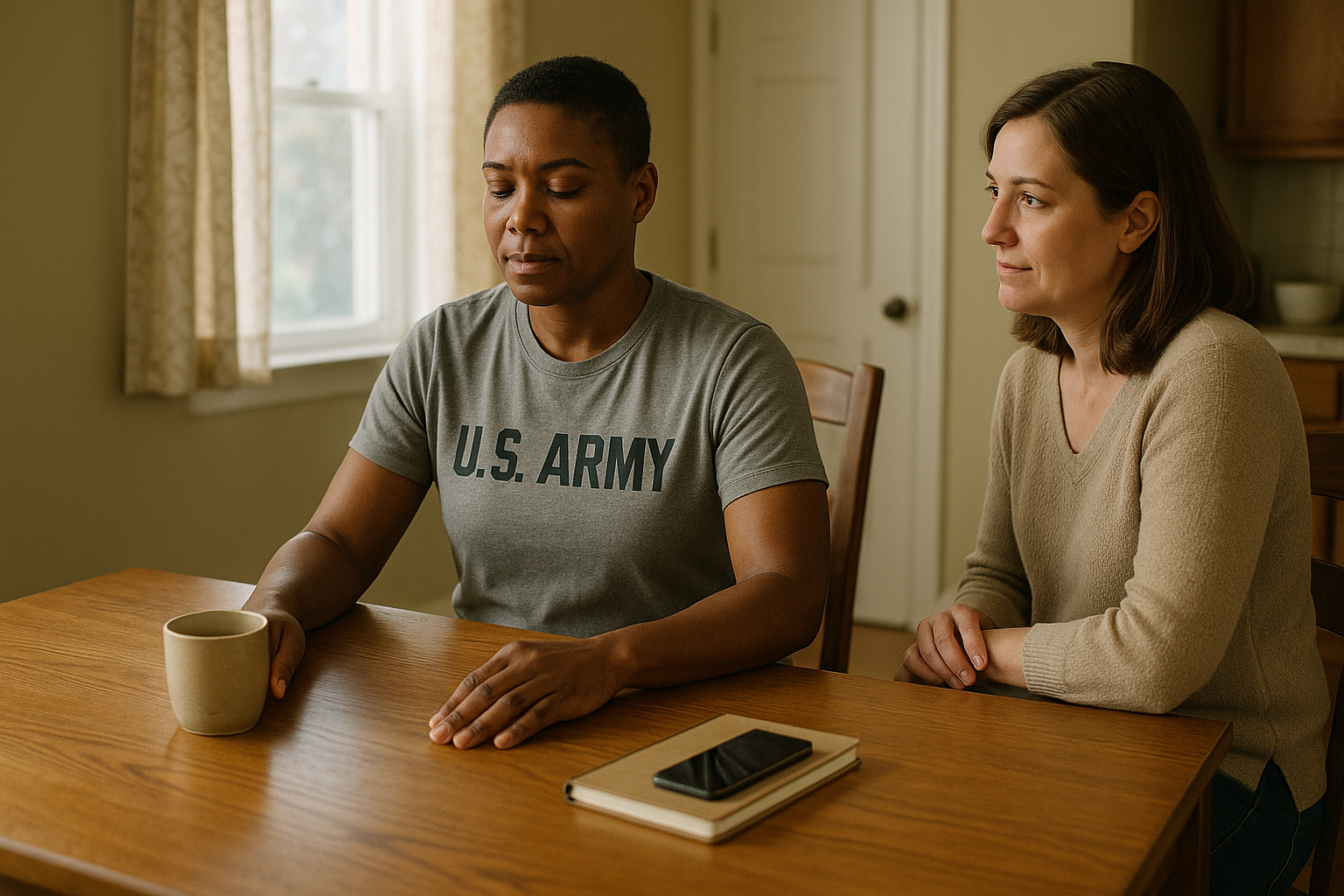
Combat PTSD describes lasting stress reactions that can develop after military trauma or repeated exposure to danger. Nightmares, unwanted memories, irritability, avoidance, numbness, or constantly feeling on guard do not mean you are weak or “broken.” They may be signs that your mind and body are still responding to experiences that felt life-threatening. Support, practical coping skills, and evidence-based PTSD treatment can help make life safer and more manageable. Recovery is personal, and it is rarely a quick or simple process.
What is combat PTSD?
Combat PTSD refers to post-traumatic stress symptoms connected with combat, deployment, military operations, or related experiences. Trauma can include direct danger, witnessing injury or death, handling remains, repeated exposure to threat, military sexual trauma, moral injury, or learning that someone close was seriously harmed.
Some Veterans develop symptoms soon after returning home. For others, symptoms appear months or years later, sometimes after retirement, illness, loss, a relationship change, chronic pain, or another major stressor. Delayed symptoms do not mean you are imagining the problem or handling it incorrectly.
Not every Veteran exposed to combat trauma develops PTSD. Reactions vary based on many factors, including the type and duration of trauma, prior experiences, sleep, injuries, health, support systems, and what happened after coming home. Only a qualified mental health professional can assess whether symptoms meet criteria for PTSD or another condition. You do not need to diagnose yourself to deserve help.
What are the signs and symptoms?
Combat-related stress can affect thoughts, emotions, the body, behavior, relationships, and a person’s sense of safety. Symptoms may come and go, or become stronger around anniversaries, news coverage, loud sounds, crowds, conflict, pain, or other reminders.
Intrusive memories and reminders
- Unwanted memories, images, or thoughts about what happened
- Nightmares or distressing dreams
- Feeling as if an event is happening again, sometimes called a flashback
- Strong emotional or physical reactions to reminders
- Distress around sounds, smells, places, people, dates, or news stories connected with trauma
A reminder does not have to be obvious. Fireworks, a helicopter, diesel fuel, a crowded store, a smell, or a news report can activate a survival response before you consciously understand why.
Avoidance and emotional numbness
- Avoiding conversations, places, activities, news, or people that bring up trauma
- Keeping constantly busy so there is no time to think or feel
- Feeling detached from loved ones or from your own emotions
- Difficulty enjoying activities that once mattered
- Using isolation to feel more in control
Avoidance can provide short-term relief, but it may gradually make ordinary situations feel more threatening. Skipping every crowded event, for example, may reduce anxiety today while making public places harder to tolerate later.
Changes in thoughts and mood
- Persistent guilt, shame, anger, fear, sadness, or hopelessness
- Believing the world is completely dangerous or that no one can be trusted
- Blaming yourself for what happened or for choices made under impossible conditions
- Difficulty remembering parts of the experience or details of daily life
- Feeling emotionally flat, disconnected, or without purpose
Some Veterans struggle with moral injury: deep pain related to actions taken, actions not taken, betrayal, or events that conflict with personal values. Moral injury and PTSD can occur together, but they are not identical. A clinician, chaplain, peer supporter, or trusted counselor can help explore these concerns without reducing them to a simple label.
Changes in alertness and reactions
- Being easily startled by sudden sounds or movements
- Scanning rooms, checking doors, or needing to see exits
- Feeling tense, restless, or unable to relax
- Irritability, anger, or verbal outbursts
- Trouble concentrating, making decisions, or sleeping
These reactions may be mistaken for personality problems. Often, they reflect a nervous system that learned to stay ready for danger. That does not excuse hurting someone, but it can point toward skills and treatment that may reduce the intensity of the response.
Why can combat reactions continue after deployment?
During combat or other dangerous operations, the brain and body prioritize survival. Attention narrows, senses become highly alert, and automatic responses happen quickly. Those adaptations can be useful in a threat zone. Back home, the same alarm system may continue reacting as though danger is nearby.
Military culture and training can reinforce strengths such as staying mission-focused, suppressing emotion, relying on the team, and handling problems independently. Those strengths may make it harder to recognize distress or ask for care after service. A Veteran may think, “Others had it worse,” or see help-seeking as a failure of leadership. Another person’s experience does not make your suffering less real.
What may help with combat PTSD?
There is no single approach that works for every Veteran and no guaranteed cure. Many people improve with professional treatment, practical skills, social support, and time. A qualified provider who understands trauma-related and military concerns can help develop a plan that fits your needs.
Evidence-based PTSD treatment
Evidence-based treatments for PTSD may include trauma-focused cognitive behavioral therapies, Cognitive Processing Therapy, Prolonged Exposure, and Eye Movement Desensitization and Reprocessing. These approaches differ, but they generally help people understand trauma-related patterns, reduce avoidance, process painful memories safely, and build more flexible responses. A trained clinician can explain what treatment involves and discuss whether an approach fits your circumstances.
Some people also benefit from medication prescribed and monitored by an appropriately qualified medical professional. Do not start, stop, or change medication without speaking with the prescriber. Tell your provider about sleep problems, pain, alcohol or drug use, suicidal thoughts, medical conditions, and other medications so care can be planned safely.
If the first provider or treatment approach is not a good fit, that does not mean treatment cannot help. Consider asking about another clinician, a different evidence-based approach, a Veteran-specific program, or a provider experienced with combat trauma, moral injury, military sexual trauma, or traumatic brain injury concerns.
Start with one manageable step
Seeking care can feel overwhelming. Begin by writing down what symptoms are most disruptive, when they happen, and what you want to be different. For example: “I wake up several nights a week, avoid driving near bridges, and snap at my family. I want to sleep better and stay present with my children.” This gives a provider a practical starting point.
You can ask a trusted person to help make a call, attend an appointment if appropriate, or remind you of questions. If speaking aloud feels difficult, bring a written note or use a secure message system offered by your healthcare provider.
What practical coping skills can help day to day?
Coping skills do not erase trauma. They can lower distress enough to help you get through the next minute, conversation, appointment, or night.
Ground yourself in the present
When a reminder triggers an intense reaction, quietly name where you are and when you are. You might say, “I am in my home. The deployment is over. This feeling is a memory or alarm response, and I am safe in this moment.” Notice five things you can see, four you can feel, three you can hear, two you can smell, and one you can taste. If counting increases distress, focus on one object and describe its shape, color, and texture.
Slow the body’s alarm response
Try breathing gently and making the exhale a little longer than the inhale, without forcing a deep breath. Relax your jaw, lower your shoulders, and place both feet on the floor. Stretching, walking, holding a cool object, or washing your hands with warm water may also help some people. Practice when calm so the skill is easier to remember when activated.
Build steadier routines
Regular wake and sleep times, meals, movement, daylight, and contact with supportive people can add predictability. If sleep is difficult, discuss it with a healthcare professional instead of relying only on alcohol or over-the-counter products. Keep goals realistic: a brief walk, one nourishing meal, or a more consistent bedtime is still progress.
Plan for known triggers
Before fireworks, a crowded gathering, a medical appointment, or a news-heavy day, make a plan. Identify an exit, arrange transportation, tell a trusted person what support looks like, and choose a quiet place for breaks. You can decide in advance what to say: “I need five minutes outside,” or “I am having a stress reaction; please speak calmly and give me space.” Planning is not surrender. It is a way to increase choice.
Reconnect without forcing yourself
Isolation can feel protective, but safe connection often supports recovery. Start small: sit with someone while watching television, share a meal, attend a peer group, or send a short message. You do not have to describe the trauma before you are ready. “I am having a difficult day and could use company” is enough.
What can make symptoms worse?
Alcohol and other substances may briefly numb memories or seem to help with sleep, but they can worsen sleep quality, irritability, depression, impulsivity, and relationships. Mixing substances with prescribed medication can also be dangerous. If substance use feels difficult to control, tell a healthcare provider honestly. Support is available, and hiding it makes safe care harder.
Other patterns that can intensify symptoms include avoiding every reminder, staying constantly isolated, skipping meals, severe sleep deprivation, consuming distressing news for hours, or managing anger through intimidation. These are understandable attempts to cope, but they can increase the alarm response and harm people you care about.
If anger is escalating, leave the situation when possible, create distance from weapons or other means of harm, and contact support before the conflict grows. Self-blame can also keep symptoms stuck. A trauma-informed therapist, peer specialist, chaplain, or trusted community leader may help you examine complicated combat experiences with care.
When is professional help appropriate?
Consider professional help when symptoms persist, return repeatedly, or interfere with sleep, work, school, relationships, driving, parenting, physical health, or safety. You do not need to wait until symptoms are severe. Help is also appropriate if you are using alcohol or drugs to cope, having panic-like reactions, feeling emotionally numb, experiencing persistent guilt or hopelessness, or avoiding more and more parts of life.
A primary care clinician can help assess sleep, pain, medications, traumatic brain injury concerns, depression, anxiety, and other health issues while connecting you with mental health care. A mental health professional can evaluate trauma symptoms and discuss treatment options. Veteran peer support can reduce isolation, but it should complement—not replace—professional care when symptoms are serious.
How can family members and caregivers respond?
Families often notice changes before a Veteran is ready to talk. Lead with concern rather than accusation. “I have noticed you are sleeping poorly and seem on edge. I care about you. How can I support you?” is more inviting than “You need to get over this.” Listen without pressing for graphic details. You can believe someone’s distress without knowing every part of the story.
Ask what helps during a trigger and respect reasonable boundaries. A Veteran may need a quiet room, reduced noise, time to cool down, or advance notice before visitors arrive. At the same time, safety and respect matter. PTSD does not justify threats, violence, controlling behavior, or abuse. If someone becomes threatening, prioritize safety, leave if you can, and seek immediate help.
Encourage care without taking over. Offer to help find a provider, arrange transportation, or sit nearby during a call. Caregivers also need rest, boundaries, support, and their own healthcare. You cannot be the only treatment plan.
Can faith or spirituality be part of recovery?
For some Veterans, faith or spirituality provides meaning, community, forgiveness, ritual, or a way to express grief. A trusted chaplain, faith leader, or spiritual counselor may offer support, including around moral injury. Spiritual care can be used alongside professional PTSD treatment; it does not replace qualified mental health or medical care. Your beliefs and choices deserve respect, including if you are questioning faith or do not identify with a religious tradition.
When to get immediate help
If you may hurt yourself or someone else, cannot stay safe, are in immediate danger, or are experiencing a medical emergency, get help now. Veterans Crisis Line: Dial 988 then Press 1, text 838255, or use VeteransCrisisLine.net chat. Call 911 for immediate danger. If possible, move away from weapons or other means of harm, ask a trusted person to stay with you, and go to the nearest emergency department. You do not have to solve the whole future right now; focus on staying alive and connected through the next step.
A way forward is possible
Combat PTSD can affect identity, relationships, the body, and a Veteran’s view of the future. It can also be met with care, skills, connection, and treatment. You may not be able to change what happened, but you can seek help for what is happening now. Start with one honest conversation, one appointment request, one grounding practice, or one message to someone safe.
Learning about related topics such as hypervigilance, PTSD nightmares and sleep, and moral injury may help you identify support that fits your situation. You deserve care whether symptoms began recently, years ago, or are difficult to name.
Trusted PTSD & Veteran Support Resources
This article is educational and is not a diagnosis or a substitute for professional care.
- VA National Center for PTSD
- VA PTSD Self-Help and Coping Resources
- Veterans Crisis Line — Dial 988 then Press 1; text 838255
0 Comments