
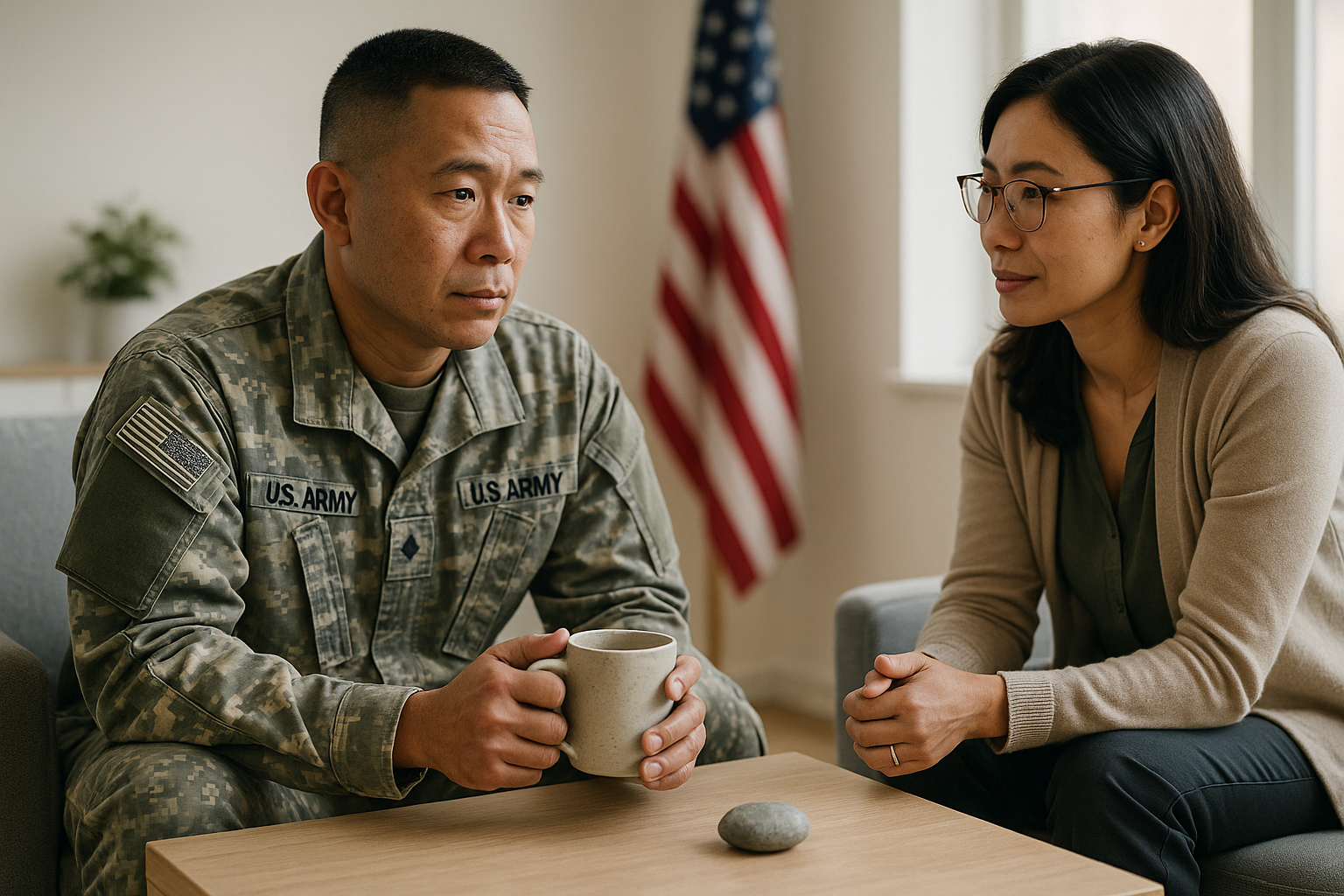
Combat PTSD is a possible response to experiencing, witnessing, or learning about life-threatening or deeply disturbing events during military service. If you are dealing with unwanted memories, sleep problems, anger, avoidance, jumpiness, numbness, or difficulty reconnecting after combat, support is available. These reactions do not mean you are weak, and you do not have to handle them alone. A qualified mental health professional can help you understand what is happening and discuss evidence-based PTSD treatment.
What is combat PTSD?
Combat post-traumatic stress disorder, often called combat PTSD, is a mental health condition that can develop after trauma connected with military service. Trauma may include combat exposure, witnessing injury or death, experiencing an attack, handling the aftermath of violence, or repeatedly hearing disturbing details as part of military duties.
Some Veterans notice symptoms soon after returning home. For others, symptoms emerge months or years later, sometimes after retirement, a major life change, illness, loss, news coverage, or another reminder of the past. Symptoms can also become more noticeable when the structure and purpose of military life change.
This article cannot determine whether you have PTSD. A professional evaluation is the best way to understand your symptoms and identify appropriate care. Other concerns, including depression, anxiety, traumatic brain injury, sleep disorders, substance use, chronic pain, or medical conditions, can overlap with PTSD symptoms and may need attention too.
What are common signs and symptoms of combat PTSD?
PTSD symptoms can affect thoughts, emotions, the body, behavior, relationships, and daily functioning. People do not all experience the same pattern. Symptoms may come and go, and some people work hard to hide them.
Intrusive memories and reminders
- Unwanted memories, images, or thoughts about what happened
- Nightmares or distressing dreams
- Feeling as if the event is happening again, sometimes called a flashback
- Strong emotional or physical reactions to reminders such as helicopters, fireworks, diesel smells, crowds, news reports, darkness, or certain dates
- Difficulty concentrating because memories or worries interrupt your attention
A reminder does not have to be obvious. A sound, smell, body position, location, or conversation can activate a learned danger response before you consciously identify the connection.
Avoidance and emotional shutdown
- Avoiding people, places, activities, conversations, or media connected with the trauma
- Staying constantly busy so there is no quiet time to think
- Using work, exercise, alcohol, or other behaviors to keep feelings away
- Feeling detached from family, friends, or parts of yourself
- Having difficulty experiencing joy, affection, hope, or closeness
Avoidance can bring short-term relief, but it may gradually make more situations feel unsafe or off-limits. You do not need to force yourself into reminders without support. A trained clinician can help you approach difficult memories or situations safely and at a manageable pace.
Being on guard or easily startled
- Scanning rooms, checking doors, or sitting where you can see entrances
- Feeling tense, restless, or ready to react
- Being easily startled by sudden sounds or movement
- Irritability, anger, or a short temper
- Difficulty sleeping or staying asleep
- Risky behavior or a strong need to control surroundings
These reactions may have helped you survive in a dangerous environment. At home, however, the same alert system can remain activated even when the immediate threat has passed.
Changes in mood, beliefs, and relationships
- Persistent fear, guilt, shame, sadness, or helplessness
- Feeling responsible for things outside your control
- Loss of trust in other people or the world
- Negative beliefs about yourself, such as feeling damaged or undeserving
- Emotional numbness or difficulty expressing feelings
- Withdrawal from family, friends, work, school, or community
Some Veterans also struggle with moral injury, which can involve deep pain related to actions, losses, decisions, or events that conflict with personal values. Moral injury and PTSD can overlap, but they are not identical. A compassionate, qualified professional, chaplain, or other trusted support person may help you explore these concerns without judgment.
Why can combat reactions continue after deployment?
During danger, the brain and body prioritize survival. Attention narrows, muscles prepare for action, and the nervous system becomes highly sensitive to possible threats. These responses can be lifesaving in combat. After returning to a safer setting, the system may not immediately recalibrate.
Sleep disruption, repeated exposure to danger, injuries, pain, grief, isolation, family stress, and difficult transitions can make recovery harder. The brain may continue treating certain sounds, situations, or emotions as signals that danger is near. This is not a character flaw. It is one reason a person may know intellectually that they are safe while still feeling unsafe in their body.
Combat-related experiences can also affect identity and purpose. Military service may provide structure, teamwork, responsibility, and a clear mission. Returning to civilian life can bring uncertainty, misunderstandings, or a feeling that others cannot relate to what you experienced. These challenges can intensify symptoms, but they can also be addressed with the right support.
What may help with combat PTSD?
Many people improve with appropriate care, although treatment is not an instant fix and recovery is not always linear. A qualified provider can help you choose an approach based on your symptoms, health history, goals, preferences, and safety needs.
Evidence-based professional treatment
Evidence-based PTSD treatments include trauma-focused psychotherapies such as Cognitive Processing Therapy, Prolonged Exposure, and Eye Movement Desensitization and Reprocessing. These approaches are delivered by trained professionals and use different methods to reduce the impact of trauma memories, avoidance, and unhelpful beliefs. Ask a provider to explain what treatment involves, what choices you have, and how progress will be monitored.
Medication may be part of a treatment plan for some people. Only a qualified prescriber can advise whether medication is appropriate for you. Do not start, stop, or change medication without speaking with the prescriber who manages it.
If the first provider or approach does not feel like a good fit, that does not mean help cannot work. You can ask about another clinician, a different evidence-based approach, telehealth, group treatment, or care that understands military culture. You may also want to read related IAmPTSD resources about trauma triggers, grounding skills, or moral injury.
Practical steps you can try today
Small, repeatable actions can help your nervous system receive signals of safety. They are coping tools, not substitutes for professional care when symptoms are severe or persistent.
- Name the present: Say the date, your location, and what is happening now. For example: “I am in my living room. It is Tuesday evening. I am safe enough in this moment.”
- Use grounding: Notice five things you see, four things you feel, three things you hear, two things you smell, and one thing you taste. You can also press both feet into the floor and describe the chair supporting you.
- Slow the body: Try a gentle exhale that is a little longer than the inhale, without forcing your breath. Stop if breathing exercises make you more distressed and choose another grounding method.
- Create a transition routine: After work or an appointment, take a shower, change clothes, have a nonalcoholic drink, and spend a few quiet minutes before entering family activities.
- Protect sleep: Keep a consistent wake time when possible, reduce upsetting media before bed, and make the bedroom as calm and predictable as you can. Persistent nightmares deserve professional attention.
- Plan for triggers: If fireworks, crowds, or certain stores are difficult, identify an exit, bring a trusted person, use hearing protection when appropriate, and decide how you will leave if needed.
- Stay connected in manageable ways: Send a short message, attend a peer group, take a walk with someone, or sit with family without needing to discuss everything.
- Track patterns: Briefly note sleep, triggers, pain, alcohol or substance use, mood, and helpful actions. This information can help you and a clinician identify patterns.
Choose one or two steps rather than trying to change everything at once. If a coping strategy increases fear, shame, or physical distress, pause and seek guidance.
What can make combat PTSD symptoms worse?
Some short-term coping methods can create additional problems over time. Alcohol or drug use may temporarily numb memories or help with sleep, but it can worsen mood, irritability, sleep quality, relationships, and safety. It can also interfere with treatment. If you are using substances to cope, tell a healthcare professional honestly; you deserve support rather than punishment.
Other factors that may intensify symptoms include severe sleep loss, isolation, skipping meals, untreated pain, constant exposure to distressing news, conflict at home, and avoiding every situation that feels uncomfortable. Avoidance is understandable, but total avoidance can shrink your life. Work with a qualified clinician on gradual, safe steps instead of forcing exposure on your own.
Be cautious with products or programs that promise a guaranteed cure, require you to stop established care, or present supplements and other unproven treatments as replacements for evidence-based treatment. Discuss any new product or treatment with a healthcare professional, especially if you take prescription medication or have other health conditions.
How can families and caregivers respond?
Families often notice changes before a Veteran asks for help. A supportive response can lower shame and make care more possible.
- Choose a calm, private time and speak about what you observe: “I have noticed you are sleeping poorly and pulling away. I care about you. How can I support you?”
- Listen without demanding details. The Veteran does not have to describe the trauma to deserve help.
- Believe the person’s distress even if you do not understand every reaction.
- Ask what helps during triggers and make a simple plan for leaving a crowded or stressful situation.
- Offer practical support, such as helping schedule an appointment, arranging transportation, or watching children during a visit.
- Respect privacy while staying attentive to safety concerns.
- Set clear boundaries around yelling, threats, violence, substance use, or unsafe behavior. Compassion and safety can exist together.
Try not to say “just get over it,” argue about whether the danger was real, surprise the person from behind, or pressure them to talk before they are ready. Do not take every withdrawal or angry reaction as a personal rejection, but do address behavior that harms others.
Caregivers need support too. Consider your own healthcare provider, a trusted friend, a support group, or counseling. You cannot be the only source of care, and protecting your own rest and safety is not selfish.
When is professional help appropriate?
Consider contacting a healthcare or mental health professional when symptoms last, return repeatedly, or interfere with sleep, work, school, relationships, physical health, or daily activities. Help is especially important if you are avoiding most of your life, relying on alcohol or drugs, having severe anger, experiencing frequent panic, feeling persistently hopeless, or having thoughts of harming yourself or someone else.
You can begin with a primary care clinician, a mental health professional, a Veteran-focused provider, or another trusted healthcare contact. You do not need to wait until symptoms become unbearable, and you do not need to be certain that you have PTSD before asking questions. You can say, “I had combat experiences, and I am having reactions that are affecting my life. I would like an evaluation and information about treatment.”
When to get immediate help
If you may hurt yourself or someone else, cannot stay safe, or are in immediate danger, get help now. Veterans Crisis Line: Dial 988 then Press 1, text 838255, or use VeteransCrisisLine.net chat. Call 911 for immediate danger. If possible, move away from weapons or other means of harm, go where another safe person is present, and tell someone clearly that you need immediate help.
If you are supporting someone who may be in immediate danger, stay with them when it is safe to do so, contact emergency help, and avoid handling the situation alone.
Can faith or spirituality be part of recovery?
For some Veterans, faith or spirituality provides meaning, connection, forgiveness, service, or a way to process loss. A trusted chaplain, faith leader, or spiritual care provider may offer support that respects your beliefs and boundaries. Spiritual care can be used alongside mental health treatment; it does not replace professional PTSD care. If faith questions bring more guilt or distress, you can seek a provider who will listen without imposing beliefs.
A next step is enough
Combat PTSD can affect a Veteran’s sense of safety, identity, relationships, and future, but symptoms are not a verdict on your strength or worth. You can start with one honest conversation, one appointment request, one message to someone you trust, or one grounding practice today.
You do not have to share every detail of what happened. You do not have to prove that your experience was serious enough. If combat-related symptoms are affecting your life, reaching for qualified support is a practical act of self-care and responsibility. Recovery may take time, and support can help you build a life that is larger than what happened.
Trusted PTSD & Veteran Support Resources
This article is educational and is not a diagnosis or a substitute for professional care.
- VA National Center for PTSD
- VA PTSD Self-Help and Coping Resources
- Veterans Crisis Line — Dial 988 then Press 1; text 838255
0 Comments