
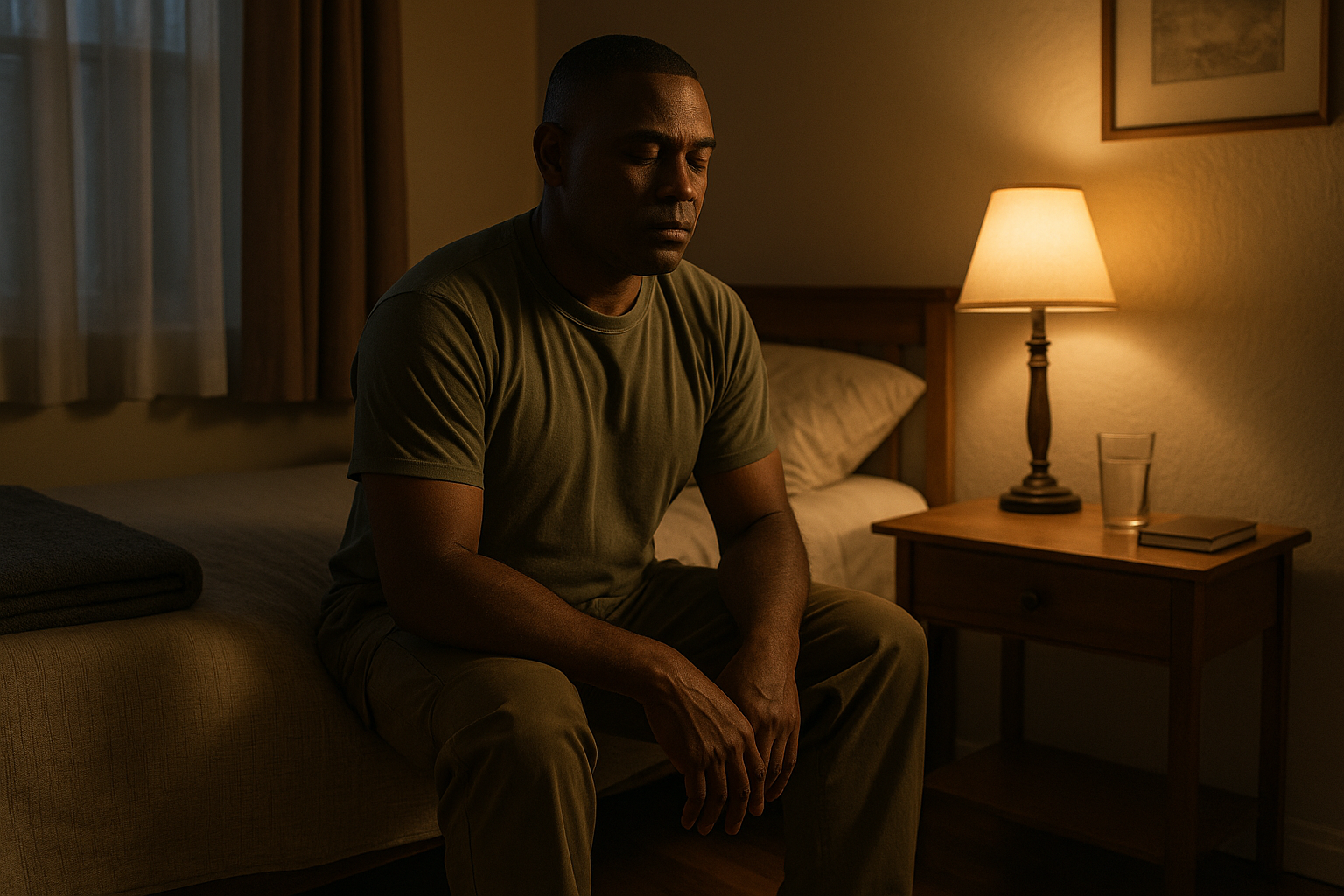
Yes—combat-related trauma can disrupt sleep by keeping the brain and body prepared for danger even when a Veteran is physically safe. Nightmares, unwanted memories, anxiety, irritability, pain, noise sensitivity, and difficulty relaxing can make it hard to fall asleep or stay asleep. Helpful steps include creating a steady routine, reducing nighttime triggers, using grounding skills, and connecting with a qualified medical or mental health professional. You do not have to manage these reactions alone.
What can sleep disruption look like?
Sleep problems after trauma do not look the same for everyone. A Veteran or service member might:
- Take a long time to fall asleep because the mind keeps scanning for danger.
- Wake repeatedly or sleep lightly at every sound.
- Have distressing dreams or nightmares.
- Wake sweating, startled, tense, or with a racing heart.
- Avoid sleep because nighttime feels unsafe.
- Sleep during the day and remain awake at night.
- Feel exhausted, irritable, forgetful, or emotionally numb during the day.
Sleep may worsen around anniversaries, news coverage, arguments, crowds, darkness, fireworks, or other reminders. Sometimes there is no obvious trigger. Pain, hearing problems, breathing interruptions, shift work, alcohol, caffeine, other health conditions, and medication side effects can also affect sleep. Discuss these possibilities with a healthcare professional instead of trying to sort them out alone.
Why can combat-related trauma affect sleep?
During and after dangerous experiences, the nervous system may learn to stay ready for threats. At night, quiet and reduced visual control can make that alert state more noticeable. An ordinary sound may be interpreted as a warning, while increased muscle tension, heart rate, and wakefulness make rest more difficult.
Trauma memories can return through dreams, sensations, emotions, or fragments rather than as a complete story. Avoiding sleep may seem protective, especially when nightmares are a concern. Over time, inconsistent sleep can increase fatigue and make stress reactions harder to manage. This is a common trauma response—not a sign of weakness or failure.
What can Veterans try tonight and over the next few weeks?
Make the sleep setting predictable
Use a simple, repeatable wind-down routine. You might dim the lights, complete personal care, write down tomorrow’s tasks, and spend a few quiet minutes on a calming activity. Keep the bedroom comfortable, cool, and quiet when possible. A fan, white noise, earplugs, or a small night-light may help. Choose what feels safe without turning the room into a place of constant monitoring.
Give the mind a transition out of alert mode
Try slow breathing, gentle stretching, or grounding before bed. One option is to notice five things you can see, four things you can feel, three things you can hear, two things you can smell, and one thing you can taste. You can also repeat a present-focused statement such as, “I am in my home, it is nighttime, and I am safe enough in this moment.” Grounding does not erase trauma; it can help orient you to the present.
Use a steady schedule when possible
Wake up at about the same time each day, including after a poor night, if your responsibilities and health allow. Get daylight and gentle movement during the day. If you nap, keep it brief and earlier rather than close to bedtime. These habits may take time to affect sleep, so look for gradual changes rather than a perfect night.
Plan for nightmares without blaming yourself
Keep water, a light, and a grounding reminder nearby. After waking, look around the room and name the date, location, and a few ordinary objects. Sit up, place your feet on the floor, and take slow breaths. If nightmares continue, tell a qualified provider. Therapies that address nightmares and trauma-related sleep problems may be available, and a clinician can explain appropriate options.
What may make sleep problems worse?
Alcohol or other substances may seem to help someone fall asleep, but they can fragment sleep, worsen nightmares, and increase mood or safety risks. Heavy caffeine use, nicotine close to bedtime, late-night scrolling, violent media, and irregular sleep hours can also keep the nervous system activated. If you use prescribed medication or an over-the-counter product, do not stop, start, or change it without speaking with the prescriber or another qualified healthcare professional.
Trying to force sleep can create another cycle of frustration. If you remain awake and increasingly tense, consider leaving the bed for a quiet, low-light activity and returning when drowsy. Avoid checking the clock repeatedly. A clinician trained in cognitive behavioral therapy for insomnia, often called CBT-I, can teach more structured strategies.
When is professional help appropriate?
Consider reaching out when sleep problems persist, interfere with work or relationships, increase alcohol or substance use, or make driving and daily tasks unsafe. Professional support is also important if nightmares, unwanted memories, panic, depression, anger, or isolation are growing. You do not need to wait until symptoms become severe, and seeking help does not automatically mean you will be diagnosed with PTSD.
A primary care clinician can check for physical contributors such as pain or sleep apnea and discuss referrals. A qualified mental health professional can assess trauma-related symptoms and explain evidence-based PTSD treatments, including trauma-focused psychotherapies such as Cognitive Processing Therapy, Prolonged Exposure, or Eye Movement Desensitization and Reprocessing. CBT-I and nightmare-focused care may also be useful. Treatment is individualized; a provider can help you decide what fits your needs, readiness, health, and goals.
How can loved ones respond?
Start with calm, practical support. You might say, “I notice sleep has been hard lately. Do you want company, help finding care, or just someone to listen?” Believe the person’s experience without demanding details about what happened. Ask before touching or waking someone from a nightmare, keep your voice low, and help orient them to the present.
Offer support for a routine—such as a morning walk, a medical appointment, or reducing evening demands—without acting as a supervisor. Respect privacy and boundaries. If safety concerns arise, take statements about hopelessness or self-harm seriously and help connect the person with immediate support.
Faith, spirituality, and meaning
For some Veterans, faith or spirituality provides meaning, community, prayer, meditation, or a trusted person to talk with. These supports can be part of recovery when they feel welcome and respectful. They do not replace medical or mental health care, and no one should be pressured to use them.
When to get immediate help
If you may hurt yourself or someone else, cannot stay safe, or are in immediate danger, call 911. Veterans and service members can contact the Veterans Crisis Line: dial 988 then Press 1, text 838255, or use the chat at VeteransCrisisLine.net. If possible, move away from weapons or other means of harm and ask a trusted person to stay with you while help is reached.
Better sleep can begin with small, steady steps, but persistent trauma-related sleep problems deserve real support. Reaching out is a practical act of care—not a failure of strength.
Trusted PTSD & Veteran Support Resources
This article is educational and is not a diagnosis or a substitute for professional care.
- VA National Center for PTSD
- VA PTSD Self-Help and Coping Resources
- Veterans Crisis Line — Dial 988 then Press 1; text 838255
0 Comments